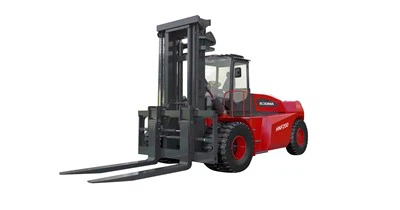
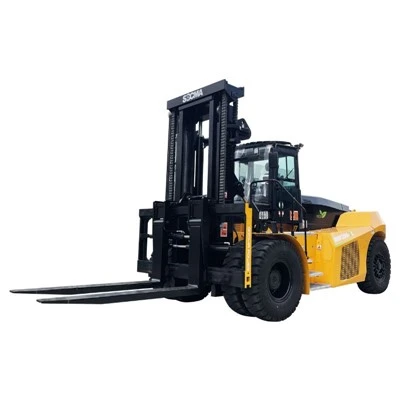
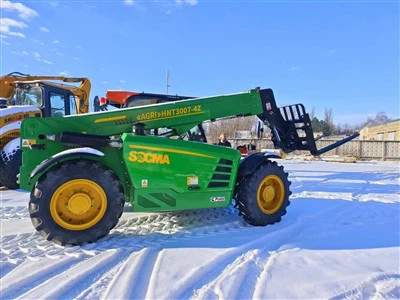
Calculating the load capacity of a 13.5-ton forklift is crucial for ensuring safe and efficient operations in a warehouse or industrial setting. As a supplier of 13.5-ton forklifts, I've seen firsthand the importance of getting this right. In this blog, I'll walk you through the key factors and steps to calculate the load capacity of these powerful machines.
Understanding the Basics of Forklift Load Capacity
First things first, let's talk about what load capacity actually means. The load capacity of a forklift is the maximum weight it can safely lift and transport. For a 13.5-ton forklift, that's a pretty hefty amount, but it's not always as straightforward as it seems.
The load capacity is usually determined by the manufacturer and is based on ideal conditions. But in real-world scenarios, there are several factors that can affect how much weight a forklift can handle.
Factors Affecting Forklift Load Capacity
1. Load Center
The load center is one of the most important factors. It's the distance from the face of the forks to the center of gravity of the load. Most forklifts are rated for a specific load center, usually 24 inches (600 mm). If you're lifting a load with a different load center, the load capacity will change.
For example, if you're lifting a load with a load center greater than the rated load center, the forklift's capacity will decrease. This is because the load creates a greater moment or turning force, which can make the forklift unstable.
2. Fork Length
The length of the forks also plays a role. Longer forks can distribute the weight of the load more evenly, but they can also increase the load center if the load extends beyond the recommended length. This can reduce the forklift's capacity.
3. Mast Height
The height to which you're lifting the load matters too. As you raise the mast, the center of gravity of the forklift and the load shifts. This can reduce the stability of the forklift and its load capacity. Generally, the higher you lift, the less weight the forklift can safely handle.
4. Tilt Angle
The tilt angle of the mast affects the load capacity as well. When the mast is tilted forward, the load center moves forward, which can decrease the capacity. Conversely, when the mast is tilted backward, the load center moves backward, which can increase the stability and potentially the capacity.
Calculating the Load Capacity
Step 1: Determine the Load Center
Measure the distance from the face of the forks to the center of gravity of the load. If the load is evenly distributed, this is usually the midpoint of the load. If the load is irregularly shaped, you may need to use some basic physics principles to find the center of gravity.
Step 2: Check the Forklift's Load Capacity Chart
Every forklift comes with a load capacity chart provided by the manufacturer. This chart shows the maximum load capacity for different load centers, mast heights, and tilt angles. Find the section of the chart that corresponds to your load center.
Step 3: Adjust for Mast Height and Tilt Angle
If you're lifting the load to a height other than the rated height or at a different tilt angle, you'll need to make adjustments. The load capacity chart will usually have additional information or formulas to help you do this.
Step 4: Consider the Fork Length
If you're using forks that are longer or shorter than the standard forks, you may need to adjust the load capacity. Some forklifts have different load capacity ratings for different fork lengths.
Let's say you have a 13.5-ton forklift with a rated load center of 24 inches. You're lifting a load with a load center of 30 inches. Looking at the load capacity chart, you find that for a 30-inch load center, the capacity is reduced to 12 tons. So, in this case, you shouldn't lift a load heavier than 12 tons.
Importance of Accurate Load Capacity Calculation
Calculating the load capacity accurately is not just about following the rules. It's about safety. Overloading a forklift can lead to accidents, such as tipping over, which can cause serious injuries to operators and damage to the equipment and the surrounding environment.
It's also important for efficiency. If you're constantly underutilizing the forklift's capacity, you're not getting the most out of your investment. On the other hand, if you're overloading it, you may end up with costly downtime due to equipment failure.


Other Considerations
In addition to the factors mentioned above, there are a few other things to keep in mind when calculating the load capacity of a 13.5-ton forklift.
1. Terrain
The type of terrain where the forklift is operating can affect its stability and load capacity. Uneven or slippery surfaces can reduce the forklift's ability to handle heavy loads safely.
2. Attachment
If you're using an attachment, such as a side shifter or a clamp, the load capacity may change. Attachments can add weight and affect the balance of the forklift, so you'll need to consult the manufacturer's guidelines for the specific attachment.
3. Operator Skill
The skill and experience of the operator also play a role. A skilled operator can handle the forklift more safely and efficiently, which can help maintain the load capacity.
Our Range of Forklifts
At our company, we not only provide 13.5-ton forklifts but also a wide range of heavy-duty forklifts to meet different needs. For example, we have the SOCMA 20 Ton Electric Forklift, which is a great option for those looking for an eco-friendly and powerful forklift. We also offer the SOCMA 30 Ton Forklift HNF300-1250-A, SOCMA 25 Ton Forklift HNF250-1250-A, 30t Electric Forklift, and SOCMA 35 Ton Forklift HNF350-1250-A.
Contact Us for Your Forklift Needs
If you're in the market for a 13.5-ton forklift or any other heavy-duty forklift, don't hesitate to contact us. We have a team of experts who can help you choose the right forklift for your specific requirements and provide you with all the information you need to calculate the load capacity accurately. We're here to make your forklift purchasing and operation experience as smooth and safe as possible.
References
- Forklift Operator's Manuals
- Forklift Manufacturer's Load Capacity Charts
- OSHA Forklift Safety Standards