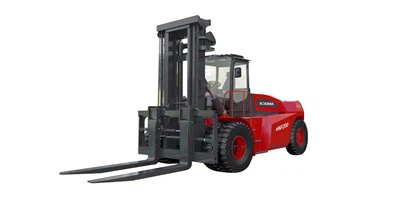
When it comes to heavy - duty material handling, an 18 - Ton Forklift is a workhorse in many industrial settings such as ports, large warehouses, and manufacturing plants. One of the critical specifications that operators and decision - makers need to understand is the turning radius. This blog post aims to delve into what the turning radius of an 18 - Ton Forklift is, why it matters, and how it relates to our offerings as an 18 - Ton Forklift supplier.
Understanding the Turning Radius
The turning radius of a forklift is defined as the minimum space required for the forklift to make a complete turn. It is typically measured from the center of the turning circle to the outermost point of the forklift during a turn. There are two main types of turning radii: the outer turning radius and the inner turning radius.
The outer turning radius is the distance from the center of the turning circle to the outermost part of the forklift, usually the rear - most corner when the forklift is making a turn. The inner turning radius, on the other hand, is the distance from the center of the turning circle to the innermost part of the forklift, often the front - most inside corner.
For an 18 - Ton Forklift, the turning radius can vary significantly depending on several factors. These factors include the design of the forklift, the type of steering system, the wheelbase, and the load it is carrying.
Factors Affecting the Turning Radius of an 18 - Ton Forklift
Forklift Design
The overall design of the forklift plays a major role in determining its turning radius. Forklifts with a more compact design generally have a smaller turning radius. For example, some modern 18 - Ton Forklifts are engineered with a shorter body length, which allows them to make tighter turns.
Steering System
The type of steering system also impacts the turning radius. There are different steering mechanisms available for forklifts, such as rear - wheel steering and all - wheel steering. Rear - wheel steering is a common configuration in many forklifts. In this setup, the rear wheels are responsible for turning the forklift. This can provide a relatively small turning radius, especially in smaller forklifts. However, for 18 - Ton Forklifts, all - wheel steering systems are sometimes used. All - wheel steering allows for more complex turning maneuvers and can reduce the turning radius in some cases, especially in tight spaces.
Wheelbase
The wheelbase of a forklift, which is the distance between the front and rear axles, is another important factor. A shorter wheelbase generally results in a smaller turning radius. However, a very short wheelbase may also affect the stability of the forklift, especially when carrying heavy loads. So, manufacturers need to strike a balance between a short wheelbase for better maneuverability and a sufficient wheelbase for stability.
Load Carrying
The weight and position of the load being carried by the 18 - Ton Forklift can also change the turning radius. When the forklift is carrying a heavy load, the center of gravity shifts. A load that is placed too far forward or too high can increase the turning radius as the forklift needs more space to maintain stability during the turn.
Typical Turning Radius of an 18 - Ton Forklift
On average, the outer turning radius of an 18 - Ton Forklift can range from 6 to 10 meters. This wide range is due to the various factors mentioned above. For forklifts with a more optimized design for tight - space maneuverability, the turning radius may be closer to 6 meters. In contrast, larger and more traditional models may have an outer turning radius closer to 10 meters.
It is essential for operators to be aware of the turning radius of their 18 - Ton Forklift, especially when working in confined spaces. For example, in a warehouse with narrow aisles, a forklift with a smaller turning radius will be able to navigate more easily, increasing productivity and reducing the risk of collisions.
Why the Turning Radius Matters
The turning radius of an 18 - Ton Forklift is not just a technical specification; it has real - world implications for the efficiency and safety of material handling operations.
Efficiency
In a busy industrial environment, time is money. A forklift with a smaller turning radius can complete tasks more quickly. It can move in and out of storage areas, load and unload trucks, and navigate through the workplace with fewer maneuvers. This means that more loads can be moved in a shorter period, increasing the overall productivity of the operation.
Safety
A proper understanding and consideration of the turning radius are crucial for safety. If a forklift operator is not aware of the turning radius, they may attempt to make a turn in a space that is too small. This can lead to collisions with other equipment, storage racks, or even pedestrians. By knowing the turning radius, operators can plan their movements more carefully and avoid accidents.
Our Offerings as an 18 - Ton Forklift Supplier
As an 18 - Ton Forklift supplier, we understand the importance of the turning radius. Our forklifts are designed with the latest technology to ensure optimal maneuverability. We offer a range of 18 - Ton Forklifts with different turning radii to meet the diverse needs of our customers.
In addition to our 18 - Ton Forklifts, we also provide a variety of heavy - duty forklifts with high - performance features. For example, if you are looking for a more powerful option, we recommend the SOCMA 20 Ton Forklift HNF200 - 1250 - A. This forklift combines strength and maneuverability, making it suitable for a wide range of applications.
If you need even greater lifting capacity, our SOCMA 25 Ton Forklift HNF250 - 1250 - A is a great choice. It is engineered to handle heavy loads with ease while still maintaining good turning performance.
For those interested in electric forklifts, we offer the SOCMA 45 Ton Electric Forklift. This environmentally - friendly option provides high - power operation and can be a great addition to a modern industrial facility.
Our SOCMA 65ton Diesel ForkliftHeavy Duty Forklift For Steel Mills Cement Prefabrication Plants Wind Power Transport is designed for the most demanding industrial applications. With its large lifting capacity and reliable performance, it can handle heavy - duty tasks in steel mills, cement plants, and wind power transportation.

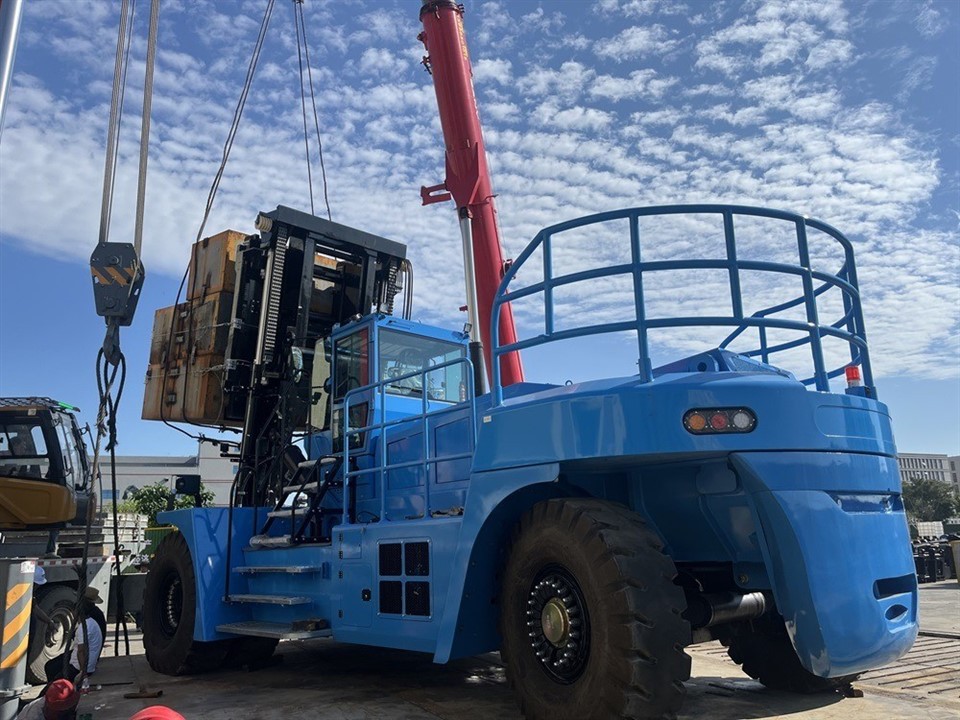
We also have the SOCMA 16 Ton Electric Forklift, which is a cost - effective and energy - efficient option for those with lower - capacity requirements.
Contact Us for Procurement
If you are in the market for an 18 - Ton Forklift or any of our other heavy - duty forklift models, we invite you to contact us for a detailed discussion. Our team of experts can help you choose the right forklift based on your specific needs, including the required turning radius, lifting capacity, and operating environment. We are committed to providing high - quality products and excellent customer service to ensure that your material handling operations run smoothly and efficiently.
References
- "Forklift Operator's Manuals - Various 18 - Ton Forklift Models", Manufacturer Publications
- "Industrial Material Handling Equipment: Design and Selection", Industry Research Reports
- "Safety Guidelines for Forklift Operations", Occupational Safety and Health Administration (OSHA) Publications