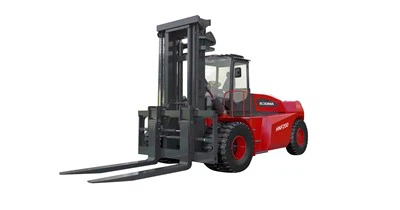
As a supplier of 30 - ton forklifts, I've had the privilege of witnessing firsthand the pivotal role these powerful machines play in the loading and unloading of trucks. In this blog, I'll share some of the best practices for using a 30 - ton forklift in these operations, ensuring safety, efficiency, and optimal performance.
Pre - operation Checks
Before even starting the forklift, a thorough pre - operation check is essential. Inspect the forklift's tires for proper inflation and any signs of damage. Low tire pressure can affect the forklift's stability, especially when carrying heavy loads. Check the brakes to ensure they are in good working condition. Faulty brakes can lead to accidents during loading and unloading, so it's crucial to test them before each use.
Examine the hydraulic system for leaks. The hydraulic system is responsible for lifting and lowering the forks, and any leaks can cause a loss of power and control. Also, check the mast and the forks for any signs of wear or damage. Bent or damaged forks can compromise the stability of the load.
Verify that all the safety devices, such as seat belts, horns, and lights, are functioning correctly. Seat belts protect the operator in case of sudden stops or collisions, while horns and lights help in alerting other workers in the area.
Load Handling
When it comes to handling loads with a 30 - ton forklift, proper technique is key. First, ensure that the load is evenly distributed on the forks. Unevenly distributed loads can cause the forklift to tip over, especially when turning or lifting. Center the load as much as possible on the forks to maintain balance.
Before lifting the load, make sure that the forks are fully inserted into the pallet or the load. Partial insertion can cause the load to slip off the forks during lifting. Lift the load slowly and steadily, keeping the mast tilted slightly backward to prevent the load from falling forward.
When moving the load, keep the forks at a low height. This reduces the center of gravity of the forklift - load combination, increasing stability. Avoid sudden stops or starts, as these can cause the load to shift and potentially lead to an accident.
Loading Trucks
When loading a truck with a 30 - ton forklift, approach the truck carefully. Align the forklift with the truck's loading area to ensure a smooth transfer of the load. Make sure the truck is parked on a level surface and is properly secured.
Use caution when driving onto the truck's bed. The surface of the truck bed may be slippery, so drive slowly and steadily. Once on the truck bed, place the load in the designated area. Stack the loads neatly to prevent them from shifting during transportation.
If the load needs to be stacked, start from the bottom and build up the stack in a stable manner. Ensure that each layer is properly aligned and supported to prevent the stack from collapsing.
Unloading Trucks
Unloading a truck follows similar principles as loading. Approach the truck carefully and position the forklift in front of the load. Slowly insert the forks into the load and lift it gently.
When removing the load from the truck, be aware of the truck's structure. Avoid hitting the sides or the roof of the truck with the forks or the load. Lower the load to a safe height before driving away from the truck.
After unloading, make sure to clear the truck bed of any debris or pallets. This helps in maintaining a safe working environment and ensures that the next loading operation can be carried out smoothly.
Operator Training
One of the most important aspects of using a 30 - ton forklift is proper operator training. Operators should be trained on the specific features and controls of the forklift. They should understand how to perform pre - operation checks, handle loads safely, and operate the forklift in different situations.
Training should also include safety procedures, such as what to do in case of an emergency. Operators should know how to respond to situations like a load shifting, a hydraulic leak, or a mechanical failure.
Regular refresher courses are also necessary to keep operators up - to - date with the latest safety standards and best practices. This ensures that they continue to operate the forklift safely and efficiently.
Maintenance
Regular maintenance is crucial for the optimal performance of a 30 - ton forklift. Follow the manufacturer's recommended maintenance schedule. This includes oil changes, filter replacements, and inspections of the various components of the forklift.
Keep the forklift clean. Dirt and debris can accumulate on the forklift, which can affect its performance and cause premature wear of the components. Regularly clean the forks, the mast, and the hydraulic system.
Store the forklift in a dry and secure location when not in use. This helps in preventing rust and damage to the forklift.
Our Product Range
At our company, we offer a wide range of heavy - duty forklifts to meet different needs. In addition to our 30 - ton forklift, we also have other models that might be of interest to you. For example, the SOCMA 65ton Diesel ForkliftHeavy Duty Forklift For Steel Mills Cement Prefabrication Plants Wind Power Transport is a powerful machine suitable for heavy - duty applications in steel mills, cement plants, and wind power transport. The SOCMA 45 Ton Electric Forklift is an environmentally friendly option with high - performance capabilities. The 72 Ton Diesel Forklift is designed for extremely heavy loads, while the SOCMA 32 Ton Forklift HNF320 - 1250 - B offers a balance between load capacity and maneuverability. The SOCMA 25 Ton Electric Forklift is a great choice for indoor operations.


Contact for Purchase
If you're interested in purchasing a 30 - ton forklift or any of our other heavy - duty forklift models, we invite you to contact us for further details and to start a procurement discussion. We are committed to providing high - quality products and excellent customer service.
References
- Forklift Safety Handbook, OSHA
- Manufacturer's Manuals for 30 - ton Forklifts
- Industry Best Practices for Heavy - Duty Forklift Operations