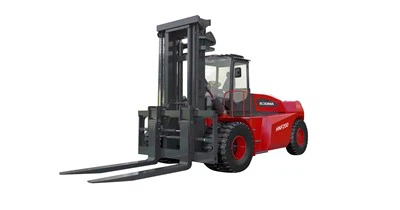
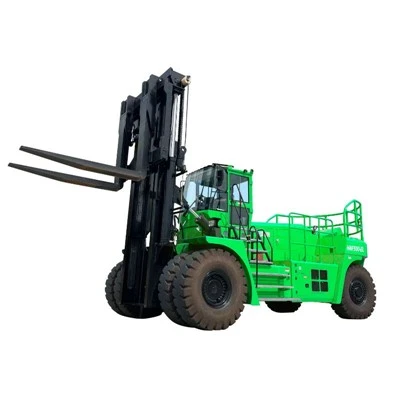
In the realm of heavy - duty material handling, a 28 - ton forklift stands as a robust workhorse. However, when operating under the unforgiving heat of hot weather, its performance and durability face a series of challenges. As a trusted supplier of 28 - ton forklifts, we understand these challenges thoroughly and are well - equipped to offer insights and solutions.
The Impact of High Temperatures on the Engine
The engine is the heart of a 28 - ton forklift, and high temperatures can significantly affect its performance. In hot weather, the engine has to work harder to maintain the same level of power output. The increased ambient temperature makes the air entering the engine less dense. For a combustion engine, less dense air means less oxygen available for the fuel - air mixture. This results in incomplete combustion, which reduces the engine's power and fuel efficiency.
Moreover, the engine coolant has to dissipate more heat. The cooling system may be pushed to its limits, and if the radiator is not working effectively, the engine can overheat. Overheating not only leads to a sudden shutdown of the forklift but can also cause long - term damage to engine components such as pistons, cylinder heads, and gaskets.

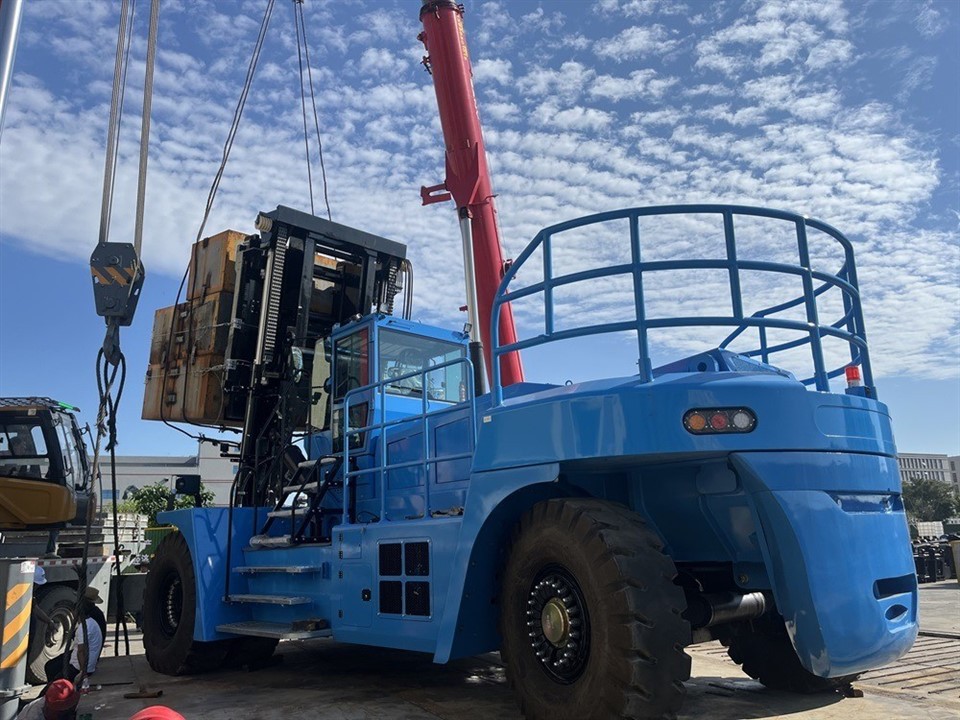
To mitigate these issues, our 28 - ton forklifts are equipped with high - performance cooling systems. The radiators have larger surface areas and more efficient fans to ensure effective heat dissipation. We also recommend regular maintenance of the cooling system during hot weather, including checking the coolant level, flushing the radiator, and inspecting the water pump for any signs of wear.
Battery Performance in Hot Climates
For electric 28 - ton forklifts, the battery is a critical component that can be affected by high temperatures. Batteries produce heat during charging and discharging processes. In hot weather, the ambient heat adds to this internal heat generation. Excessive heat can accelerate the chemical reactions inside the battery, leading to faster degradation of the battery plates and electrolyte.
Higher temperatures can also cause battery overcharging. As the battery temperature rises, its internal resistance decreases, and the charging current may increase. This can overcharge the battery, causing premature failure and reducing its overall lifespan.
Our electric 28 - ton forklifts incorporate advanced battery management systems. These systems monitor the battery temperature during charging and discharging processes. If the temperature exceeds a safe level, the charging current is automatically adjusted or the charging process may be paused to prevent damage. Additionally, we recommend storing the forklift in a shaded area during breaks to reduce the exposure of the battery to direct sunlight.
Hydraulic System Considerations
The hydraulic system is responsible for lifting and manipulating heavy loads in a 28 - ton forklift. In hot weather, the hydraulic fluid can become thinner due to the increased temperature. Thinner fluid has lower viscosity, which can lead to leaks in the hydraulic system. The seals in the hydraulic cylinders and pipes may not be able to hold the thinner fluid effectively, resulting in fluid loss and reduced hydraulic pressure.
Reduced viscosity can also affect the performance of the hydraulic pumps. The pumps rely on the proper viscosity of the fluid to generate the required pressure. If the fluid is too thin, the pump may not be able to function efficiently, leading to slower lifting and lowering speeds of the forks.
Our 28 - ton forklifts use high - quality hydraulic fluids that have a high viscosity index. These fluids can maintain their viscosity over a wide range of temperatures, ensuring consistent performance of the hydraulic system even in hot weather. We also recommend regular inspection of the hydraulic system for any signs of leaks and prompt replacement of worn - out seals.
Tire Wear and Performance
Tires play a crucial role in the stability and maneuverability of a 28 - ton forklift. In hot weather, the increased temperature can cause the tires to expand. This expansion can lead to uneven wear on the tire tread, reducing the tire's grip on the ground. Uneven tire wear can also affect the balance of the forklift, making it more prone to tipping over, especially when carrying heavy loads.
Excessive heat can also degrade the rubber compound of the tires. The rubber can become brittle over time, increasing the risk of tire punctures and blowouts. These issues not only pose a safety hazard but also lead to costly downtime for tire replacement.
Our 28 - ton forklifts are fitted with high - quality tires that are designed to withstand high temperatures. These tires have special heat - resistant compounds and reinforced sidewalls. We also recommend regularly checking the tire pressure during hot weather, as the pressure can increase due to the expansion of the air inside the tires. Maintaining the correct tire pressure helps to ensure even tire wear and optimal performance.
Other Components and Overall Operator Comfort
Beyond the major systems mentioned above, hot weather can also impact other components of the 28 - ton forklift. For example, electronic components are sensitive to high temperatures. The control modules, sensors, and wiring can malfunction if they are exposed to excessive heat for an extended period.
In terms of operator comfort, working in hot weather can be physically demanding. Fatigue can set in more quickly, and the operator's focus and concentration may be affected. Our forklifts are designed with operator comfort in mind. They are equipped with air - conditioned cabs to keep the operator cool during long - shifts. The controls are ergonomically designed to reduce operator fatigue and increase efficiency.
Related Products
As a comprehensive forklift supplier, we also offer a range of other heavy - duty forklifts, such as the SOCMA 45 Ton Electric Forklift, the SOCMA 13.5 Ton Forklift HNF135 - 600 - A, the SOCMA 25 Ton Forklift HNF250 - 1250 - A, the SOCMA 50 Ton Forklift HNF500 - 1250 - A, and the SOCMA 16 Ton Forklift HNF160 - 600 - C. Each of these models is engineered to meet the demanding needs of different industries and operating conditions.
Conclusion and Call to Action
In conclusion, while hot weather presents a series of challenges to the performance of a 28 - ton forklift, our products are designed and engineered to overcome these obstacles. With advanced cooling systems, battery management, high - quality hydraulic fluids, and heat - resistant tires, our forklifts can maintain reliable performance even in the most extreme heat.
If you are in the market for a heavy - duty forklift that can withstand hot weather conditions and offer superior performance, we invite you to contact us for procurement discussions. Our team of experts is ready to provide you with detailed product information, customized solutions, and competitive pricing.
References
- Smith, J. (2022). Heavy - Duty Forklift Maintenance in Extreme Conditions. Industrial Equipment Journal.
- Johnson, A. (2021). The Impact of Temperature on Forklift Performance. Material Handling Quarterly.