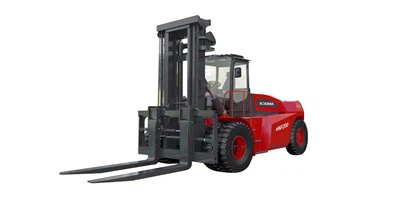
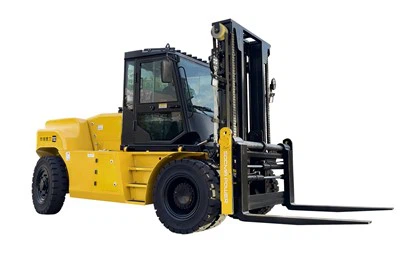
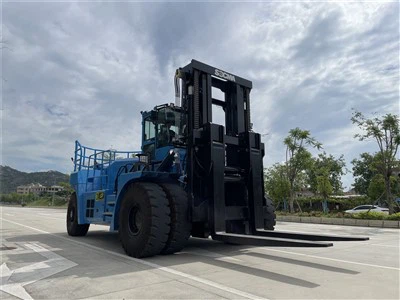
When it comes to heavy - duty forklifts like the 28 - ton forklift, understanding the fuel type is crucial. A 28 - ton forklift is a behemoth in the industrial world, commonly used in large warehouses, shipping yards, and construction sites. As a supplier of 28 - ton forklifts, I am well - versed in the different fuel options available and their respective advantages and disadvantages for these powerful machines.
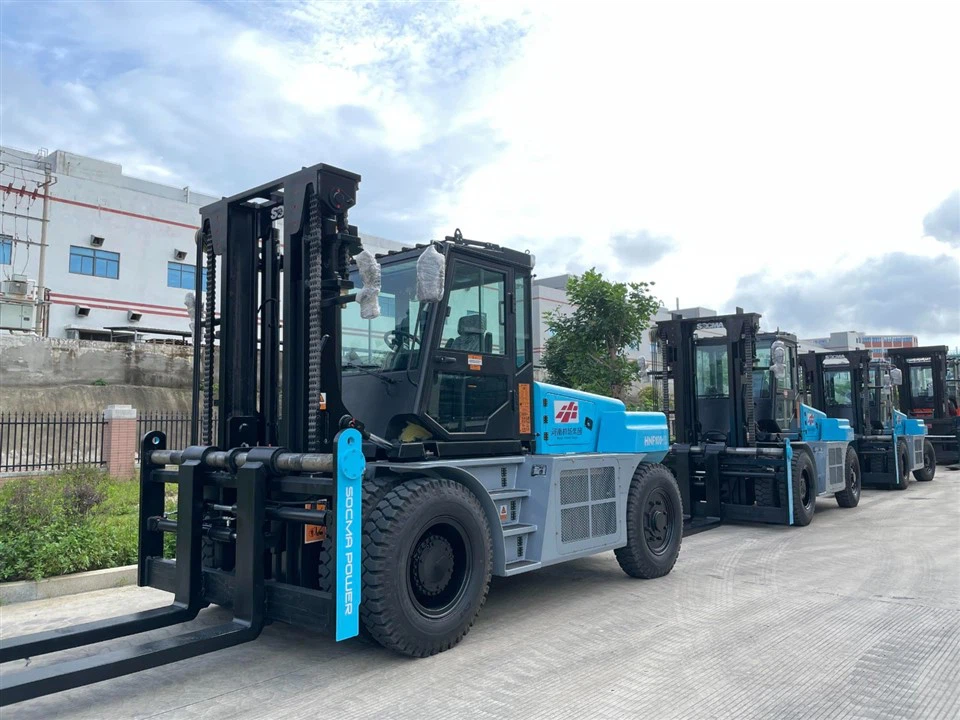

Diesel Fuel
Diesel is one of the most common fuel types for 28 - ton forklifts. Diesel engines are known for their high torque and durability, which are essential features for heavy - lifting operations. The high - compression nature of diesel engines allows them to generate a large amount of power, making them well - suited for the heavy loads that a 28 - ton forklift typically handles.
One of the main advantages of diesel - powered 28 - ton forklifts is their fuel efficiency. Diesel fuel has a higher energy density compared to gasoline, which means that a diesel - powered forklift can travel longer distances and perform more work on a single tank of fuel. This is particularly important in large industrial settings where the forklift may need to operate continuously for long periods.
Another benefit of diesel engines is their robustness. They can withstand harsh working conditions, including high temperatures and heavy loads. Diesel engines also have a longer lifespan compared to some other types of engines, which means lower long - term maintenance costs. However, diesel engines also have some drawbacks. They produce more emissions compared to electric or propane - powered forklifts. In areas with strict environmental regulations, diesel - powered forklifts may not be the best option.
Electric Power
Electric forklifts are becoming increasingly popular, even for 28 - ton models. Electric forklifts are powered by large batteries, which provide a clean and quiet alternative to diesel engines. The main advantage of electric 28 - ton forklifts is their environmental friendliness. They produce zero emissions at the point of use, making them ideal for indoor applications where air quality is a concern.
Electric forklifts are also relatively easy to maintain. They have fewer moving parts compared to diesel engines, which means less wear and tear and fewer potential breakdowns. Additionally, electric forklifts are quieter than their diesel counterparts, which can be an important factor in noise - sensitive environments.
However, electric forklifts also have limitations. The battery life can be a concern, especially for heavy - duty applications. A 28 - ton electric forklift may require frequent recharging, which can disrupt operations. The initial cost of an electric forklift is also typically higher than that of a diesel forklift, although the long - term savings on fuel and maintenance can offset this difference.
Propane
Propane, also known as liquefied petroleum gas (LPG), is another fuel option for 28 - ton forklifts. Propane - powered forklifts offer a good balance between power and environmental friendliness. Propane engines produce fewer emissions compared to diesel engines, although they do produce more than electric forklifts.
One of the advantages of propane - powered forklifts is the ease of refueling. Propane tanks can be quickly swapped out, allowing the forklift to return to operation with minimal downtime. This is particularly useful in applications where continuous operation is required.
Propane engines also offer good performance. They provide a similar level of power to diesel engines, making them suitable for heavy - lifting tasks. However, propane - powered forklifts may have a slightly lower fuel efficiency compared to diesel forklifts, and the cost of propane can vary depending on the market.
Considerations for Choosing the Fuel Type
When choosing the fuel type for a 28 - ton forklift, several factors need to be considered. The first is the operating environment. If the forklift will be used primarily indoors, an electric forklift may be the best option due to its zero emissions and quiet operation. On the other hand, if the forklift will be used outdoors in a large industrial yard, a diesel or propane - powered forklift may be more suitable.
The cost is also an important factor. While electric forklifts have a higher initial cost, they may offer lower long - term costs in terms of fuel and maintenance. Diesel forklifts, on the other hand, have a lower initial cost but may have higher fuel and maintenance costs over time. Propane - powered forklifts offer a middle - ground in terms of cost.
The frequency of use and the workload of the forklift are also important considerations. If the forklift will be used continuously for long periods, a fuel - efficient option like diesel or electric may be more appropriate. If the forklift will be used intermittently, a propane - powered forklift may be a good choice due to its ease of refueling.
Our Product Range
We, as a 28 - ton forklift supplier, offer a wide range of forklifts with different fuel types to meet the diverse needs of our customers. In addition to our 28 - ton forklifts, we also have other models in our product line. For example, we have the SOCMA 12 Ton Forklift HNF120 - 600 - A, which is a reliable and powerful machine suitable for medium - sized jobs. The SOCMA 30 Ton Forklift HNF300 - 1250 - A is another heavy - duty option for those who need even more lifting capacity.
Our SOCMA 10 Ton Electric Forklift is a great choice for indoor applications where environmental friendliness and quiet operation are important. The 45 Ton Heavy Duty Container Forklift For Railway Terminal & Intermodal Cargo Handling is designed specifically for large - scale cargo handling operations. And our SOCMA 16 Ton Diesel Forklift New Condition Steel Material With Diesel Engine For Construction Farm And Warehouse Industries is a robust and economical option for various industries.
Contact for Purchasing
If you are in the market for a 28 - ton forklift or any other heavy - duty forklift in our product range, we encourage you to contact us for a detailed discussion. We can provide you with more information about the different fuel types, the features of our forklifts, and help you choose the best option based on your specific requirements. Whether you are looking for a diesel, electric, or propane - powered forklift, we have the expertise and the products to meet your needs.
References
- "Forklift Operator's Manual". Various manufacturers' manuals were consulted for information on forklift fuel types, performance, and maintenance.
- Industry reports on heavy - duty forklift usage and trends, which provided insights into the market demand for different fuel types.