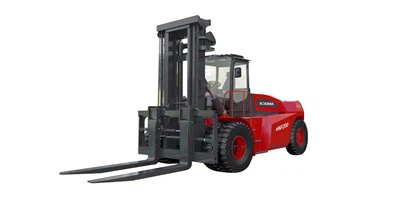
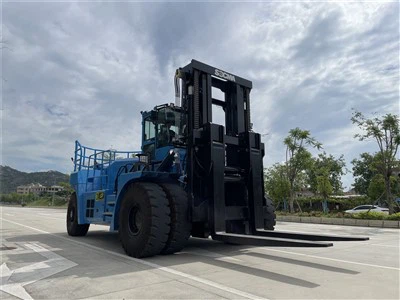
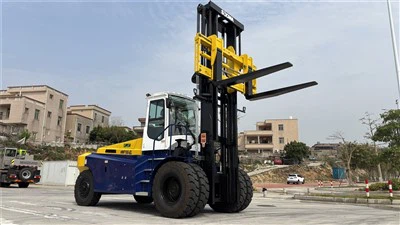
The hydraulic system is the heart of a 30 - ton forklift, enabling it to perform heavy - lifting tasks with precision and efficiency. As a leading 30 - ton forklift supplier, I'm excited to delve into the inner workings of this crucial system.
Basic Components of the Hydraulic System
A 30 - ton forklift's hydraulic system consists of several key components, each with a specific function. The main parts include the hydraulic pump, hydraulic fluid, control valves, hydraulic cylinders, and hoses.
Hydraulic Pump
The hydraulic pump is the power source of the hydraulic system. It is typically driven by the forklift's engine. The pump draws in hydraulic fluid from the reservoir and pressurizes it. There are different types of pumps used in forklifts, such as gear pumps and piston pumps. Gear pumps are simple, reliable, and cost - effective. They work by the meshing and disengaging of gears to move the fluid. In a 30 - ton forklift, a high - pressure pump is required to generate enough force to lift heavy loads. For instance, a piston pump might be used as it can produce higher pressures compared to gear pumps, allowing the forklift to handle 30 - ton loads.
Hydraulic Fluid
The hydraulic fluid serves multiple purposes. It acts as a medium to transmit power, lubricates the moving parts in the hydraulic system, and helps in dissipating heat. The choice of hydraulic fluid is crucial. It should have good viscosity - temperature characteristics, high anti - wear properties, and be resistant to oxidation. A high - quality hydraulic fluid ensures the smooth operation of the forklift's hydraulic system and extends the lifespan of the components.


Control Valves
Control valves are used to regulate the flow of the hydraulic fluid. They determine the direction, pressure, and amount of fluid that reaches the hydraulic cylinders. In a 30 - ton forklift, the operator uses levers or joysticks to control these valves. For example, when the operator wants to lift the forks, they operate the control valve to direct the pressurized fluid to the lift cylinder. There are various types of control valves, including spool valves and poppet valves. Spool valves are commonly used in forklift hydraulic systems because they are simple to operate and can handle high - flow rates.
Hydraulic Cylinders
Hydraulic cylinders are the actuators of the system. They convert the hydraulic energy into mechanical energy. In a 30 - ton forklift, there are typically two main types of cylinders: lift cylinders and tilt cylinders. The lift cylinders are responsible for raising and lowering the forks. They are designed to withstand high pressures and heavy loads. When the pressurized fluid enters the lift cylinder, it pushes the piston, which in turn raises the forks. The tilt cylinders, on the other hand, are used to tilt the mast forward or backward, allowing for better load handling and stability.
Hoses
Hoses are used to connect the different components of the hydraulic system. They must be able to withstand high pressures and be flexible enough to allow for the movement of the forklift's parts. High - quality hoses are made of materials that are resistant to abrasion, heat, and chemicals. They ensure a leak - free connection between the pump, valves, and cylinders.
How the Hydraulic System Works in Lifting Operations
When the operator decides to lift a load using the 30 - ton forklift, the following sequence of events occurs in the hydraulic system.
- Power Generation: The forklift's engine starts, and it drives the hydraulic pump. The pump begins to draw hydraulic fluid from the reservoir and pressurize it.
- Fluid Direction Control: The operator manipulates the control valve associated with the lift function. This valve opens the passage for the pressurized fluid to flow from the pump to the lift cylinders.
- Lifting Action: The pressurized fluid enters the lift cylinders, pushing the pistons upwards. As the pistons move, they lift the mast and the forks along with the load. The force exerted by the lift cylinders is proportional to the pressure of the hydraulic fluid and the surface area of the pistons. In a 30 - ton forklift, the lift cylinders are designed with a large piston area to generate enough force to lift heavy loads.
- Load Holding: Once the load is lifted to the desired height, the operator can lock the control valve to hold the pressure in the lift cylinders. This keeps the load stationary at the set height. The hydraulic system is designed to prevent any sudden drops in the load due to internal leaks or external factors.
Tilt Operation of the Forklift
Tilt operation is another important function of the 30 - ton forklift, and the hydraulic system plays a key role in it. Here's how it works:
- Operator Command: The operator uses the control lever or joystick to initiate the tilt operation. They can choose to tilt the mast forward or backward depending on the requirements of the load handling task.
- Fluid Diversion: The control valve for the tilt function diverts the pressurized hydraulic fluid to the appropriate tilt cylinder. For example, if the operator wants to tilt the mast forward, the valve directs the fluid to the forward - tilt cylinder.
- Tilting Action: The pressurized fluid enters the selected tilt cylinder, causing the piston to move. This movement of the piston tilts the mast in the desired direction. The tilt cylinders are designed to provide smooth and controlled tilting of the mast, ensuring the stability of the load.
Maintenance of the Hydraulic System
Proper maintenance of the hydraulic system is essential to ensure the reliable and efficient operation of a 30 - ton forklift. Here are some important maintenance points:
- Fluid Level and Quality: Regularly check the hydraulic fluid level in the reservoir. If the level is low, add the appropriate type of fluid. Also, monitor the quality of the fluid. Over time, the fluid can become contaminated with dirt, debris, or water. Contaminated fluid can cause damage to the hydraulic components, so it should be replaced at the recommended intervals.
- Filter Replacement: The hydraulic system has filters that remove contaminants from the fluid. These filters should be replaced regularly to prevent clogging. A clogged filter can restrict the flow of fluid, reducing the efficiency of the system and potentially causing damage to the pump and other components.
- Hose Inspection: Inspect the hydraulic hoses for signs of wear, cracks, or leaks. Damaged hoses should be replaced immediately to prevent fluid loss and ensure the safety of the operator and the equipment.
- Component Lubrication: Although the hydraulic fluid lubricates many of the components, some parts may require additional lubrication. Follow the manufacturer's recommendations for lubricating specific components.
Our Product Range and Advantages
As a 30 - ton forklift supplier, we offer a wide range of forklifts with advanced hydraulic systems. We also have other models in our product line, such as the SOCMA 45 Ton Electric Forklift, the SOCMA 18 Ton Electric Forklift, the SOCMA 20 Ton Forklift HNF200 - 1250 - A, the 45 Ton Heavy Duty Container Forklift For Railway Terminal & Intermodal Cargo Handling, and the SOCMA 18 Ton Forklift HNF180 - 900 - B/C.
Our forklifts are designed with high - quality hydraulic components that ensure reliable performance even under heavy - duty conditions. The hydraulic systems in our forklifts are engineered for efficiency, reducing energy consumption and operating costs. We also provide comprehensive after - sales service and support to help our customers keep their forklifts in top condition.
Contact Us for Procurement
If you are in the market for a 30 - ton forklift or any of the other models in our product range, we invite you to contact us for a detailed discussion. Our team of experts is ready to provide you with in - depth information about our products, help you choose the right forklift for your specific needs, and assist you throughout the procurement process. Whether you are involved in a large - scale industrial operation, a port, or a logistics center, our forklifts can meet your heavy - lifting requirements. Don't hesitate to reach out to us for a more efficient and reliable material handling solution.
References
- "Forklift Operator's Manual," Various Forklift Manufacturers
- "Hydraulic Systems Fundamentals," Hydraulics Industry Publications
- "Maintenance Guidelines for Industrial Vehicles," Industry - standard Documents