

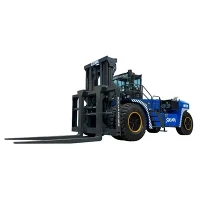


10 TON FORKLIFT ENGINE ISUZU WORK FOR CONTAINER

10 TON FORKLIFT ENGINE ISUZU WORK FOR CONTAINER

10 TON FORKLIFT ENGINE ISUZU WORK FOR CONTAINER

10 TON FORKLIFT ENGINE ISUZU WORK FOR CONTAINER

10 TON FORKLIFT ENGINE ISUZU WORK FOR CONTAINER

10 TON FORKLIFT ENGINE ISUZU WORK FOR CONTAINER

10 TON FORKLIFT ENGINE ISUZU WORK FOR CONTAINER

10 TON FORKLIFT ENGINE ISUZU WORK FOR CONTAINER
10 TON FORKLIFT ENGINE ISUZU WORK FOR CONTAINER
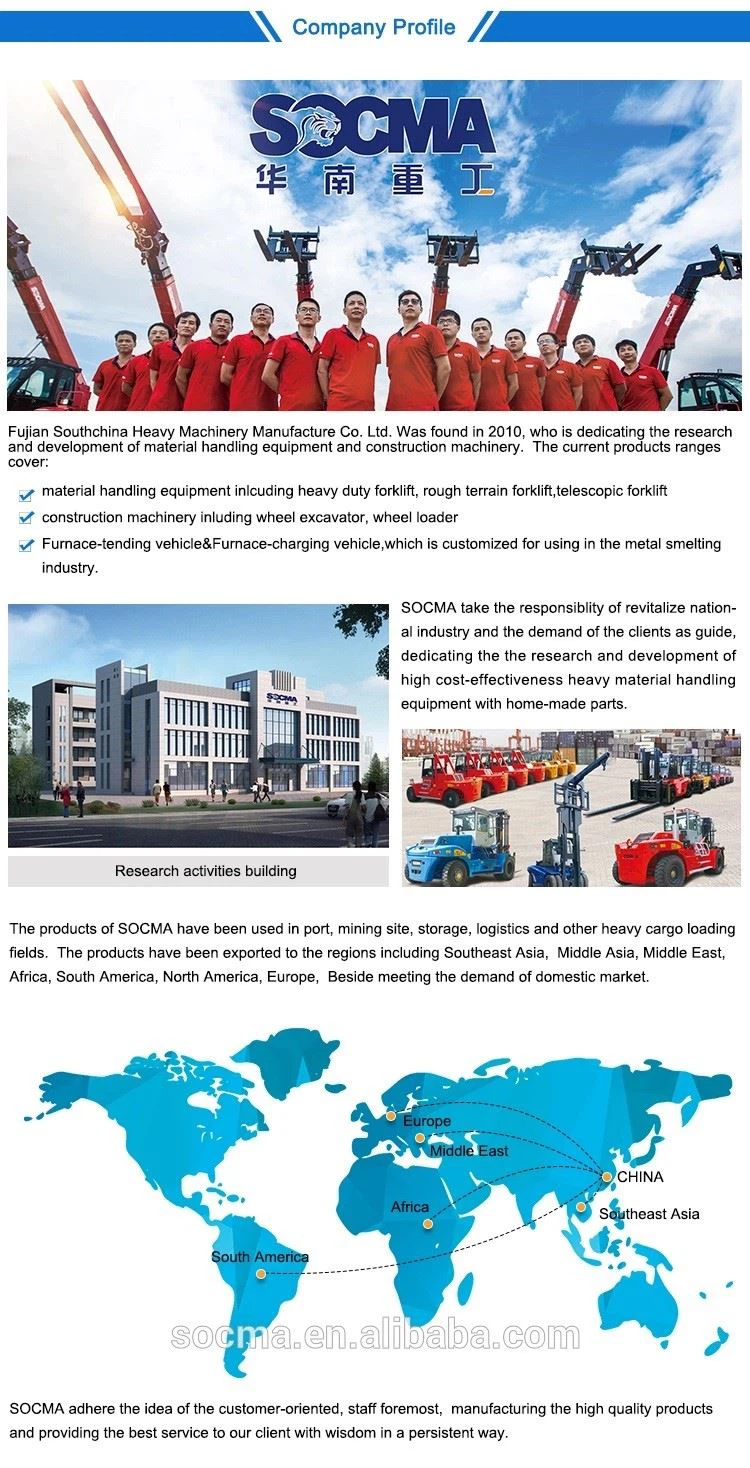
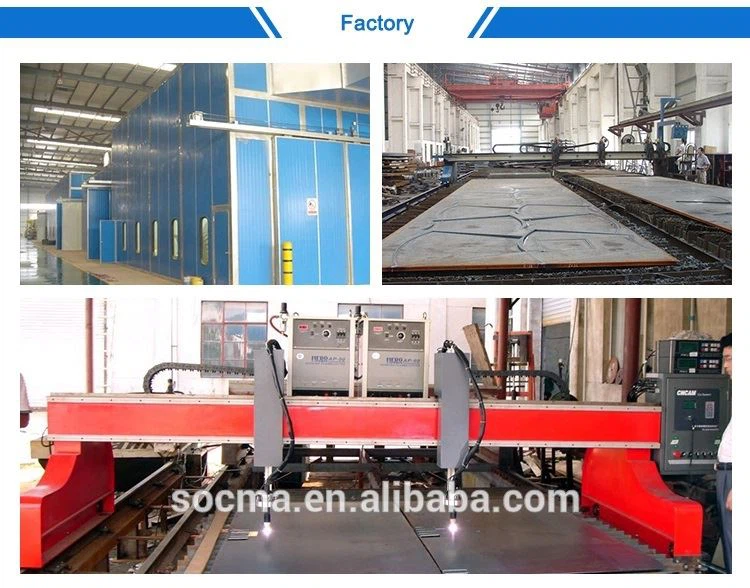
Fujian SOCMA Machinery Manufacture Co., Ltd. is one of the leading manufacturers and suppliers of 10 ton forklift engine isuzu work for container in China. With a professional production team, we are able to meet the needs of the majority of our customers. Please rest assured to buy customized equipment at competitive price from our factory.
PIC:John Email:John@socmachinery.com Whatsapp:+8618106938692
PRODUCT PARAMETER:
| Model | UNIT | FD100T | |||
| Specifications | Power Unit | Diesel | |||
| Operator Type | |||||
| Transimission Box Type | |||||
| Rated Capacity | kg | 10000 | |||
| Load Center | mm | 600 | |||
| Max.Lifting Height | mm | 3000 | |||
| Tire Type | |||||
| Tire Number | Front | 4 | |||
| Rear | 2 | ||||
| Tire Size | Front | 9.00×20-14PR | |||
| Rear | 9.00×20-14PR | ||||
| Performance | Lifting Speed | Loaded | mm/s | 380 | |
| Unloaded | 410 | ||||
| Lowering Speed | Loaded | mm/s | 450 | ||
| Unloaded | 400 | ||||
| Travelling Speed | Loaded | km/h | 26 | ||
| Unloaded | 30 | ||||
| Max.Gradeability (Loaded) | % | 20 | |||
| Max.Drawbar Pull (Loaded) | kg | 5850 | |||
| Mast Tilting Angle (Fwd/Bwd) | deg | 6/12 | |||
| Free Lifting Height | mm | 180 | |||
| Turning Radius | mm | 3900 | |||
| Dimensions | Overall Length (with fork) | mm | 5480 | ||
| Overall Width | mm | 2160 | |||
| Overhead Guard Height | mm | 2560 | |||
| Fork Size (LxWxT) | mm | 1220x175x80 | |||
| Mast Height (Fork lowered) | mm | 2850 | |||
| Battery (Voltage/Capacity) | V/Ah | 2×12/90 | |||
| Truck Weight | kg | 12500 | |||
| Fuel Tank Capacity | L | 143 | |||
| Engine | Brand | ISUZU | CHAOCHAI | ||
| Model | 6BG1 | 6102 | |||
| Rated Power | kw/rpm | 82.3/2000 | 80.8/250 | ||
| Rated torque | n-m/rpm | 418/1500 | 354/1650 | ||
| Number Of Cylinder | 6 | 6 | |||
| Displacement | 6.49 | 5.78 | |||
Products Photos:


Socma Forklift Related News:
How to quickly investigate a forklift failure? look here! A magic weapon for maintenance workers!
In the use of forklifts, it is inevitable that there will be problems of one kind or another, which will have a great impact on the labor intensity of the driver, the transportation efficiency, the technical condition of the forklift and the driving safety. How to minimize or avoid failures and eliminate the hidden dangers of accidents is a problem that forklift drivers and business managers are more concerned about and value. The normal and timely maintenance of forklifts can enable these equipment to obtain the longest service life.
Forklift fault diagnosis refers to a technology to quickly check the technical condition of the faulty forklift, diagnose the fault location and determine the cause of the fault under the condition of not disassembling (or only disassembling part of the accessories). It is an important part of the forklift use and maintenance technology. . To master the method of forklift fault diagnosis, quickly and accurately determine and eliminate the forklift fault, has a certain significance for improving the power, economy and reliability of the forklift.
If possible, various instruments and meters can be used for scientific diagnosis and verification. General conditions can use traditional methods, that is, according to the appearance of the fault (working conditions), temperature, noise, appearance and smell), as well as sudden changes in working conditions, overheating, leakage, smoke, fuel and lubricating oil consumption, listen to , Look, touch, smell and other methods to observe and feel. Enlarge individual symptoms or temporarily blank them for intuitive diagnosis. According to the timing of the appearance of the abnormal noise, the speed of the speed, the level of the speed, the pros and cons of lubrication, the size of the sound, the degree of shaking, etc., analyze its special changing law. After mastering the first-hand information of the failure symptoms, follow the structure principle of the forklift, from simple to complex, from the outside to the inside, systematically and step-by-step carefully analyze. Especially in use, failures will occur, which requires the driver to diagnose the failure. The driver usually uses the suggested and feasible intuitive diagnosis, that is, through sight, ear, hearing, hand touch, nose and sniffing, and test drive, the fault phenomenon and characteristics are carried out. Analyze and determine the fault. Clear the hidden troubles found in time to avoid the forklift failure due to natural wear, fatigue damage, aging deterioration and other quality reasons. Take measures according to the service life of each part of the forklift and the fatigue and wear degree of the parts during use, the loosening of bolts, the change of the fit clearance and other actual conditions, timely inspection, adjustment and tightening, or timely replacement of parts to eliminate failures Hidden dangers, prevent them before they happen.
The common diagnosis method of forklift failure is intuitive diagnosis. Its characteristic is that it does not require scientific means such as testing instruments, equipment and tools, but instead relies on human eyes, ears, mouth, nose, tongue, and hands to diagnose faults. Of course, its diagnostic accuracy depends to a large extent on the technical level of the diagnostic personnel. Usually forklift drivers often use this method when they encounter a failure. When diagnosing, the following methods are adopted to first find out the symptoms of the fault, and then from simple to complex, from the outside to the inside, and gradually in-depth, carry out inference analysis, and finally make a judgment.
1. One question: It is to investigate, ask about the forklift's technical status, signs of failure, whether the failure is abrupt or gradual, etc.
2. Second question: It is to observe, for example, observe the exhaust gas color of a forklift, and then analyze it in combination with other conditions to diagnose its working condition.
3. Three listening: It is to judge the forklift sound by hearing, so as to determine which are abnormal sounds and how they are formed.
4. Four smells: Diagnose the fault based on the abnormal smell that occurs at the fault location. Such as burning smell, abnormal burning smell, etc.
5. Five touches: directly touch the temperature and vibration conditions of the parts that may cause the failure with your hands to determine whether the fit is seized, whether the bearing is too tight, etc., and you can judge whether the work is normal.
6. Sixth test: It is test verification. For example, the diagnostic staff can test the car by themselves to experience the faulty part. The replacement part method can be used to verify the faulty part, and sometimes the road test can be combined to judge the fault.
The above-mentioned forklift maintenance quick-check fault diagnosis method should be used flexibly according to different faults and specific conditions.
Hot Tags: 10 ton forklift engine isuzu work for container, China, manufacturers, factory, customized
You Might Also Like



Send Inquiry