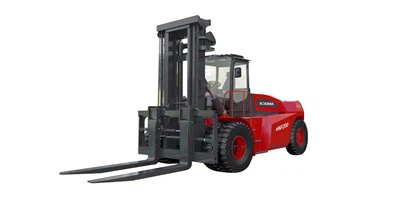
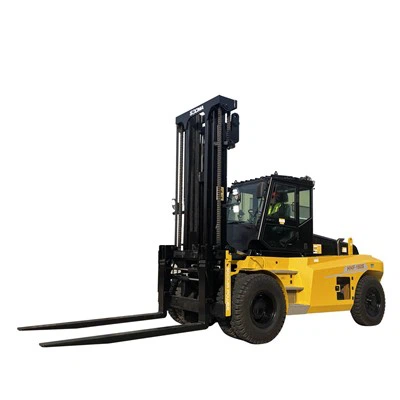
Hey there! As a supplier of 3.5 Ton Telehandlers, I'm super stoked to spill the beans about what the hydraulic system of these bad - boys is like. Hydraulics are like the lifeblood of a telehandler, and understanding how it all works can really make a difference when you're in the market for one.
So, let's start with the basics. The hydraulic system in a 3.5 Ton Telehandler is responsible for all the heavy - lifting and precise movements. It uses pressurized hydraulic fluid to transfer power from the engine to different parts of the machine. This fluid is usually a special type of oil that's designed to handle high pressures and resist wear and tear.
One of the key components of the hydraulic system is the hydraulic pump. This little workhorse is typically driven by the telehandler's engine. Its main job is to suck in the hydraulic fluid from the reservoir and then pump it out at high pressure. The higher the pressure, the more force the system can generate. It's like the heart of the hydraulic system, constantly pumping the life - giving fluid to make everything work.
Next up, we've got the hydraulic cylinders. These are the muscle. They're what actually move the boom up and down, extend and retract it, and tilt the forks to pick up and deposit loads. The way they work is pretty cool. When the high - pressure fluid from the pump enters one end of the cylinder, it pushes a piston inside. This piston is connected to whatever part of the telehandler it's supposed to move, like the boom. And when the fluid is released from that side and sent to the other end of the cylinder, the piston moves in the opposite direction. It's a simple yet brilliant concept that allows for smooth and powerful motion.
There are also control valves in the hydraulic system. These are like traffic cops, directing the flow of the hydraulic fluid to the right places at the right times. The operator uses controls in the cab to tell the valves where to send the fluid. For example, if you want to raise the boom, the control valve will divert the high - pressure fluid to the appropriate cylinder. These valves need to be really precise because a small mistake in fluid flow can lead to jerky movements or inaccurate positioning.
Now, let's talk about why a well - designed hydraulic system is so important in a 3.5 Ton Telehandler. First off, it gives the machine its power. The ability to lift and move heavy loads is directly related to how effectively the hydraulic system can generate and transfer force. With a good hydraulic setup, even a 3.5 - ton load is no biggie.
Secondly, it provides precision. In many jobs, like construction or warehouse work, you need to place loads in very specific locations. The hydraulic system allows for fine - tuned movements, so you can position the forks exactly where you need them. This precision can save a ton of time and prevent damage to the load or the surrounding area.
Another benefit is reliability. A high - quality hydraulic system is built to last. The components are made from strong materials that can withstand the high pressures and constant use. Of course, regular maintenance is still important, but if you take care of it, the hydraulic system will keep your telehandler running smoothly for years.
Let me tell you, as a supplier, I've seen the importance of a good hydraulic system firsthand. That's why we make sure that our 3.5 Ton Telehandlers come with top - notch hydraulic setups. And if you're in the market for a telehandler, you might also be interested in some of our other models. Check out our SOCMA 4 Ton 7 Meter Telescopic Forklift HNT4007 - EL, SOCMA 3 Ton 7 Meter Telescopic Forklift HNT3007, SOCMA 20 Ton 10 Meter Telescopic Forklift HNT20010 - 4Z, 20Ton Telescopic Forklift With Cylinder Handler For Mining, and SOCMA 4 Ton 15 Meter Telescopic Forklift HNT4015R. Each of these models has been carefully engineered to have a reliable and efficient hydraulic system.
Now, let's get into some of the challenges that can come with the hydraulic system in a telehandler. One of the biggest issues is leaks. Over time, the seals in the hydraulic cylinders and valves can wear out, causing fluid to leak. A small leak might not seem like a big deal at first, but it can lead to a loss of pressure and reduced performance. And if left unchecked, it can even cause damage to other components. That's why regular inspections are crucial.
Another challenge is contamination. Dirt, dust, and other particles can get into the hydraulic fluid, which can cause the valves and pumps to wear out faster. To prevent this, most telehandlers have filters in the hydraulic system. These filters trap the contaminants and keep the fluid clean. But they need to be replaced regularly to make sure they're working effectively.
Temperature can also be a factor. Hydraulic fluid has a specific temperature range in which it works best. If it gets too hot, the fluid can break down and lose its lubricating properties. On the other hand, if it gets too cold, it can become too thick, making it difficult for the pump to move it around. That's why some telehandlers have systems in place to regulate the temperature of the hydraulic fluid.
So, there you have it, a pretty in - depth look at the hydraulic system of a 3.5 Ton Telehandler. If you're in the market for one, I hope this has given you a better understanding of what to look for. A good hydraulic system can make all the difference in terms of performance, reliability, and ease of use.


If you're interested in learning more about our 3.5 Ton Telehandlers or any of our other models, don't hesitate to reach out. We're always happy to have a chat and help you find the perfect machine for your needs. Whether you're a small - scale contractor or a large - scale industrial operation, we've got the telehandler that's right for you. Let's start a conversation and see how we can work together to get you the best equipment for your business.
References:
- Industry knowledge and experience as a 3.5 Ton Telehandler supplier.
- Technical manuals and specifications of telehandler hydraulic systems.