

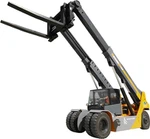
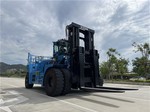


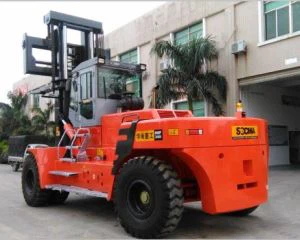
Socma 12 Ton Heavy Duty Forklift Fork Extensions Good For Logistics Transportation

Socma 12 Ton Heavy Duty Forklift Fork Extensions Good For Logistics Transportation

Socma 12 Ton Heavy Duty Forklift Fork Extensions Good For Logistics Transportation

Socma 12 Ton Heavy Duty Forklift Fork Extensions Good For Logistics Transportation

Socma 12 Ton Heavy Duty Forklift Fork Extensions Good For Logistics Transportation

Socma 12 Ton Heavy Duty Forklift Fork Extensions Good For Logistics Transportation
Socma 12 Ton Heavy Duty Forklift Fork Extensions Good For Logistics Transportation
Engine: Powerful
Steering system: safety
Transmission:Efficient

PIC:John Chen
Mobile:008618106938692
Email:john@socmachinery.com
| Technical Parameter | |||
| Design details | |||
| Item | HNF-120 | ||
| Features | Rated Load | Q(t) | 12 |
| Load center | c(mm) | 600 | |
| Wheelbase | y(mm) | 3000 | |
| Weight | Weight | kg | 18000 |
| Chassis | Tyre Specs.:Front | 10.00-20-16PR | |
| Tyre Specs.:Rear | 10.00-20-16PR | ||
| Tyres Qty,front/rear(X-drive wheels) | 4\2 | ||
| Wheel tread:Front | b10(mm) | 1650 | |
| Wheel tread:Rear | b11(mm) | 1970 | |
| Dimension | Mast/carriage tilt angle(front/rear) | Degree(°) | 6\12 |
| Mast height(fork lowering) | h1(mm) | 3100 | |
| Mast lifting height | h3(mm) | 3000 | |
| Max.lifting height | h4(mm) | 4600 | |
| Height to head guard(height to cab) | h6(mm) | 3000 | |
| Overall Length(with forks) | l1(mm) | 6055 | |
| Fork front vertical surface to the rear end of the vehicle | l2(mm) | 4855 | |
| Overall width | b1/b2(mm) | 2250 | |
| Fork Dimension | s/e(mm) | 1200X180X90 | |
| Fork carriage width | b3(mm) | 2200 | |
| Mast min ground clearance(with load) | m1(mm) | 225 | |
| Wheelbase center min ground clearance(with load) | m2(mm) | 350 | |
| Min.Turning radius | Wa(mm) | 4450 | |
| Travel speed(with load/without load) | km/h | 23/26 | |
| Performance | Max.lifting speed(with load/without load) | mm/s | 220/270 |
| Max.Lowering speed(with load/without load) | mm/s | 450/300 | |
| Traction | kN | 90 | |
| Grade ablity(with load/without load) | % | 20/22 | |
| Driving brake | Hydraulic clamp disc | ||
| Engine | Engine brand/model | Optional one | Yuchai engine |
| YC6J150-T301 6.494L 110KW 2200rpm | |||
| Optional two | Dongfeng Cummins | ||
| QSB4.5-C130 4.5L 97KW 2200rpm | |||
| Cylinder No. | 6\4 | ||
| Others | Transmission gears(Front/rear) | 2\2 | |
| Attachments working pressure | Mpa | 16 | |
| Attachments using oil amount | l/min | 40 | |


Socma Forklift Related Information and News Share:
Forklift certificate
Special term
1. Rated lifting weight: refers to the maximum weight that the forklift should be able to lift when the center of gravity of the cargo on the fork is at the specified load center distance. (Unit kg)
2. Load center distance: refers to the specified distance from the center of gravity of the cargo to the front face of the vertical section of the fork.
National regulations: Q (represents deadweight)
5 ≤ Q ≤ 10, 600mm; 12 ≤ Q ≤18, 900mm; 20 ≤ Q ≤42, 1250mm.
3. Maximum lifting height: refers to the maximum height that the fork can lift when the forklift is located on a level and solid ground, the mast is placed vertically and bears the rated lifting weight of the goods-the vertical distance from the upper plane of the fork to the ground.
4. Free lifting height: refers to the maximum height that the forks can leave the ground when the height of the mast remains unchanged.
5. Minimum turning radius: refers to the distance between the instantaneous center of the forklift and the outermost side of the vehicle body when turning the steering wheel of the forklift to the limit position and turning at the lowest stable speed.
6. Mast inclination angle: refers to the maximum angle at which the unloaded forklift mast can tilt forward or backward from its vertical position.
7. Wheelbase: the vertical distance from the center of the front axle to the center of the rear axle.
Forklift
Vehicle classification
Forklifts can generally be divided into three categories: internal combustion forklifts, electric forklifts and storage forklifts.
Internal combustion
Internal combustion forklifts are divided into ordinary internal combustion forklifts, heavy forklifts, container forklifts and side forklifts.
Ordinary internal combustion forklift
Generally, diesel, gasoline, liquefied petroleum gas or natural gas engines are used as power, with a load capacity of 1.2 to 8.0 tons, and a working channel width of 3.5 to 5.0 meters. Considering exhaust emissions and noise, it is usually used outdoors, workshops or other exhaust gas Places with no special requirements for emissions and noise. Due to the convenience of fuel replenishment, it can realize long-term continuous operation and can work in harsh environments (such as rainy days).
Heavy forklift
Diesel engine is used as the power, and the carrying capacity is 10.0~52.0 tons. It is generally used for outdoor operations in heavy cargo wharves, steel and other industries.
Container forklift
Diesel engine is used as power, and the carrying capacity is 8.0~45.0 tons. It is generally divided into empty container stacker, heavy container stacker and container reach stacker. Used in container handling, such as container yard or port terminal operations.
Side forklift
The diesel engine is used as power, and the carrying capacity is 3.0 to 6.0 tons. In the case of not turning, it has the ability to fork goods directly from the side, so it is mainly used to fork long goods, such as wooden strips and steel bars.
Folding electric
Use electric motors as power and batteries as energy sources. The carrying capacity is 1.0 to 8.0 tons, and the working channel width is generally 3.5 to 5.0 meters. Because there is no pollution and low noise, it is widely used in indoor operation and other working conditions with high environmental requirements, such as medicine, food and other industries. As people pay more attention to environmental protection, electric forklifts are gradually replacing internal combustion forklifts. Since each set of batteries generally needs to be recharged after about 8 hours of work, spare batteries are required for multi-shift working conditions.
Folding storage
Warehouse forklifts are mainly designed for handling goods in warehouses. Except for a few storage forklifts (such as manual pallet forklifts) which are driven by human power, others are driven by electric motors. They are widely used in the storage industry because of their compact body, flexible movement, light weight and good environmental performance. When working in multiple shifts, a motor-driven storage forklift needs a spare battery.
Folding truck
The carrying capacity is 1.6 to 3.0 tons, the working channel width is generally 2.3 to 2.8 meters, and the lifting height of the fork is generally about 210 mm. It is mainly used for horizontal transportation and cargo handling in the warehouse. There are three modes of operation: walking, standing and sitting, which can be selected according to efficiency requirements.
Folding stacker
Electric pallet stackers are divided into two types: full-electric pallet stackers and semi-electric pallet stackers. As the name suggests, the former is driving, and the lifting is electrically controlled, which is relatively labor-saving. The latter requires manual pulling or pushing the forklift to walk, and the lifting is electric.
The carrying capacity is 1.0~2.5 tons, and the working channel width is generally 2.3~2.8 meters. It has more masts than electric pallet trucks in structure. The lifting height of the forks is generally within 4.8 meters, which is mainly used for stacking and stacking goods in warehouses. Loading and unloading.
Folding forward vehicle
The carrying capacity is 1.0~2.5 tons. The mast can be moved forward or retracted as a whole. When retracted, the working channel width is generally 2.7~3.2 meters, and the lifting height can reach up to about 11 meters. It is often used for medium-height stacking and picking in the warehouse. Cargo operations.
Folding electric picking cart
In some working conditions (such as the distribution center of a supermarket), it is not necessary to ship the entire pallet, but to select multiple varieties of goods according to the order to form a pallet. This link is called picking. According to the height of the selected goods, electric picking forklifts can be divided into low-position picking forklifts (within 2.5 meters) and medium-high-position picking forklifts (up to 10 meters).
The carrying capacity is 2.0-2.5 tons (low position), 1.0-1.2 tons (medium-high position, lift with cab).
Low driving three-way stacker forklift
Usually equipped with a three-way stacking head, the forklift does not need to turn, the fork can be rotated to stack and pick up the goods on both sides, the channel width is 1.5 to 2.0 meters, and the lifting height can reach 12 meters. The forklift's cab cannot always be lifted on the ground. Considering the limitation of the operating field of vision, it is mainly used for lifting heights below 6 meters.
Driving a three-way stacker forklift in a high position
Similar to the low-drive three-way stacking forklift, the high-drive three-way stacking forklift is also equipped with a three-way stacking head with a channel width of 1.5 to 2.0 meters and a lifting height of up to 14.5 meters. The cab can be raised, the driver can clearly observe goods at any height, and can also perform picking operations. The efficiency and various performances of the high-drive three-way stacker are better than the low-drive three-way stacker, so this model has gradually replaced the low-drive three-way stacker.
Folding electric tractor
Electric tractor (trailer)
The tractor is driven by an electric motor and uses its towing capacity (3.0-25 tons) to pull several trolleys with cargo behind. The main categories are: electric tractors for airport logistics, electric tractors for workshops, small electric tractors, electric three-wheel tractors, which are often used for the transportation of large quantities of goods in or between workshops, such as the transportation of automobile manufacturing warehouses to assembly lines , Luggage transportation at the airport.



Hot Tags: socma 12 ton heavy duty forklift fork extensions good for logistics transportation, China, manufacturers, factory, customized
You Might Also Like


Send Inquiry