


I. Overview of Silicon Industry Production Environment
1. Silicon Refining Process
The silicon refining process involves complex metallurgical operations where raw materials including high-purity quartz (SiO2) and carbon reductants are processed in electric arc furnaces at temperatures exceeding 2000°C. This process requires precise material handling for charging, tapping, and product handling operations. The reduction process generates metallic silicon through the chemical reaction SiO2 + 2C → Si + 2CO, demanding specialized equipment capable of withstanding extreme thermal conditions while maintaining operational precision.
2. Environmental Challenges
Industrial silicon production facilities present multiple environmental challenges, characterized by intense heat radiation, abrasive dust particles, and corrosive elements. Ambient temperatures in operation zones typically range from 60-80°C, with direct exposure to molten silicon at 1414°C during tapping. The presence of silica dust, carbon particles, and silicon monoxide vapors creates a highly demanding environment for equipment operation, requiring exceptional protection measures and durability features.
3. Material Handling Requirements
Material handling in silicon refineries encompasses various critical operations: raw material transport (quartz 10-100mm, carbon materials), charge mixing, furnace feeding, and product handling. Each operation demands precise control, with load capacities ranging from 3-10 tons and lifting heights up to 6 meters. The handling equipment must maintain stability and precision while operating in extreme conditions, ensuring consistent production flow and worker safety.
4. Safety Considerations
Safety protocols in silicon refineries are stringent due to high-temperature operations and hazardous materials. Equipment must comply with international safety standards including heat protection (ISO 13732), dust explosion prevention (ATEX directives), and operator safety requirements. Critical considerations include thermal protection systems, emergency protocols, and specialized operator training for high-temperature material handling operations.

II. SOCMA Specialized Forklift Core Advantages
1. Heat-Resistant Design Features
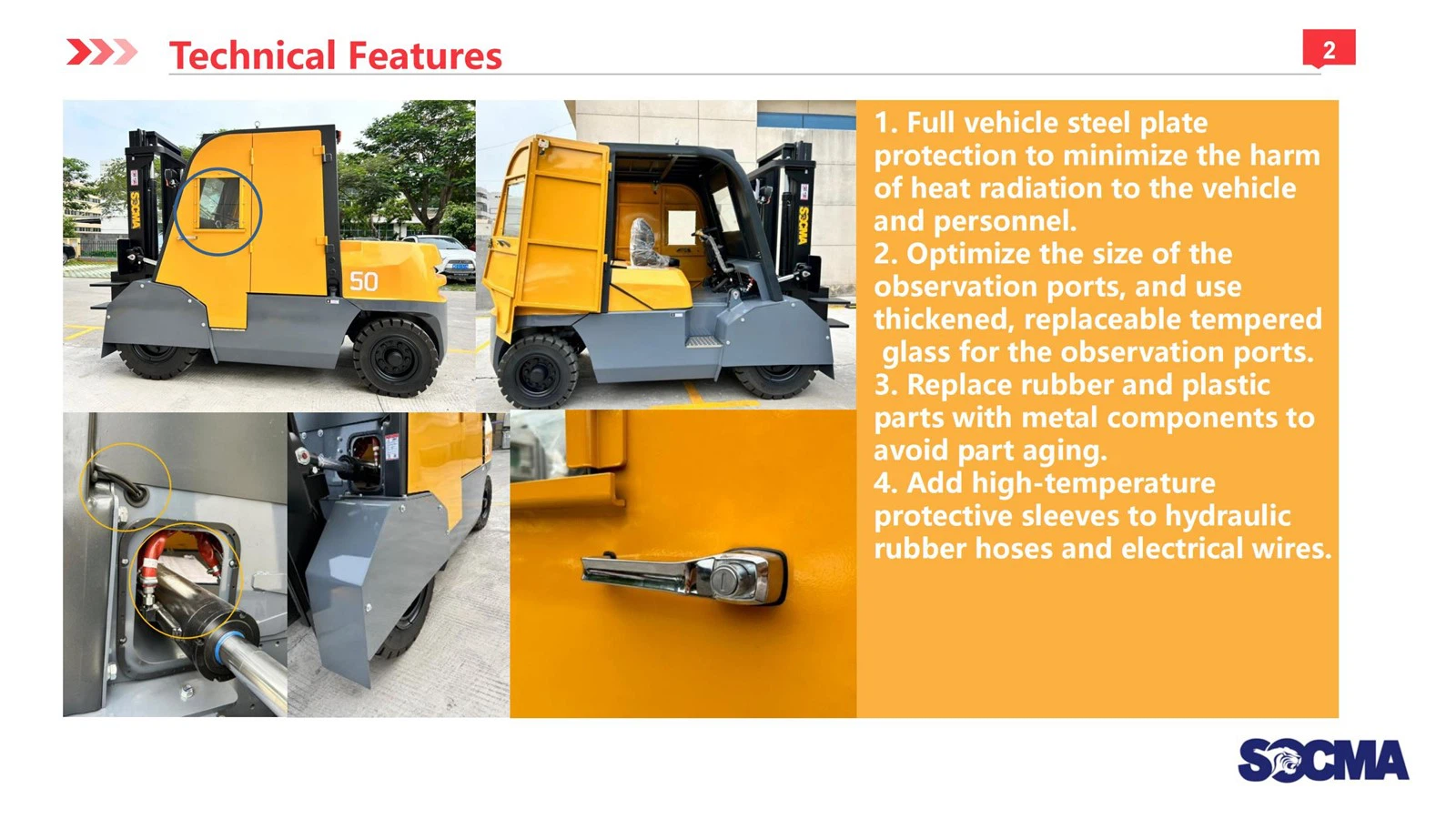
SOCMA's specialized forklifts incorporate comprehensive thermal protection systems featuring full steel plate armor with thickness ranges from 4-8mm depending on exposure levels. The design includes strategically placed heat shields, reinforced with high-temperature resistant materials capable of withstanding continuous exposure to temperatures up to 1000°C. Advanced thermal barriers and cooling systems maintain optimal operating temperatures for critical components.
2. Enhanced Safety Systems
The safety framework integrates multiple protection layers including temperature monitoring systems with real-time alerts, emergency shutdown mechanisms, and specialized operator cabin protection. Key features include reinforced FOPS/ROPS structures, multi-point temperature sensors, and advanced fire suppression systems. The cabin maintains internal temperatures below 30°C even in extreme ambient conditions through advanced cooling systems.
3. Component Upgrades
Critical component upgrades include high-temperature hydraulic systems rated for continuous operation at elevated temperatures, specialized seals and bearings designed for thermal stress resistance, and reinforced structural elements. All rubber and plastic components are replaced with metal alternatives or high-temperature composites capable of maintaining integrity in extreme conditions.
4. Operational Optimization
The operational design focuses on maximizing efficiency while ensuring safety in high-temperature environments. Features include optimized visibility through heat-resistant observation ports, precise load control systems, and automated safety protocols. The control systems incorporate advanced sensors and monitoring equipment to maintain optimal performance in challenging conditions.
III. Application Scenario Analysis
1. Electric Arc Furnace Operations
SOCMA forklifts excel in electric arc furnace operations through specialized adaptations for high-temperature material handling. The equipment features precision loading systems capable of handling charges up to 10 tons with positioning accuracy of ±10mm. Advanced thermal protection enables continuous operation in furnace proximity, while automated monitoring systems ensure optimal performance and safety compliance.
2. Raw Material Handling
The raw material handling system incorporates specialized attachments for various material types, with quick-change capabilities and automated weight measurement. Load cells provide real-time weight monitoring with accuracy of ±0.5%, while specialized grabs and buckets ensure efficient handling of different material sizes and compositions. The system maintains material integrity while optimizing operational flow.
3. Product Transfer Operations
Product handling capabilities include specialized attachments for hot material transport, featuring temperature-resistant materials and cooling systems. The equipment can handle products at temperatures up to 800°C while maintaining structural integrity and operator safety. Advanced control systems ensure precise movement and positioning during critical transfer operations.
4. Maintenance Operations
Maintenance support features include specialized attachments for furnace cleaning, slag handling, and equipment service operations. The design incorporates quick-access panels for routine maintenance, with modular components for efficient replacement. Advanced diagnostic systems monitor equipment health and predict maintenance requirements.
IV. Technical Features and Innovation
1. Structural Engineering
The structural design incorporates advanced materials and engineering principles for maximum durability in extreme conditions. Key features include reinforced frame construction using high-temperature alloys, specialized welding techniques for thermal stress resistance, and modular design elements for efficient maintenance and upgrades. Load-bearing components are engineered for continuous operation under thermal stress.
2. Control Systems
Advanced control systems integrate multiple safety and operational features including real-time temperature monitoring, load management, and position control. The system incorporates PLC-based controls with redundant safety systems, providing precise operation control while maintaining operator safety. Multiple sensors monitor critical parameters and provide automated responses to adverse conditions.
3. Safety Innovations
Safety innovations include advanced operator protection systems, emergency response capabilities, and environmental monitoring. Key features incorporate multiple layers of thermal protection, advanced fire suppression systems, and automated emergency protocols. The system maintains continuous monitoring of operational parameters with immediate response to safety concerns.
4. Performance Optimization
Performance features focus on maximizing operational efficiency while maintaining safety standards. The system incorporates advanced power management, optimized hydraulic systems, and precise control capabilities. Real-time monitoring and adjustment systems ensure optimal performance under varying conditions while maintaining equipment integrity and operator safety.
V. Practical Application Cases
1. Malaysia Top Silicon Factory Implementation
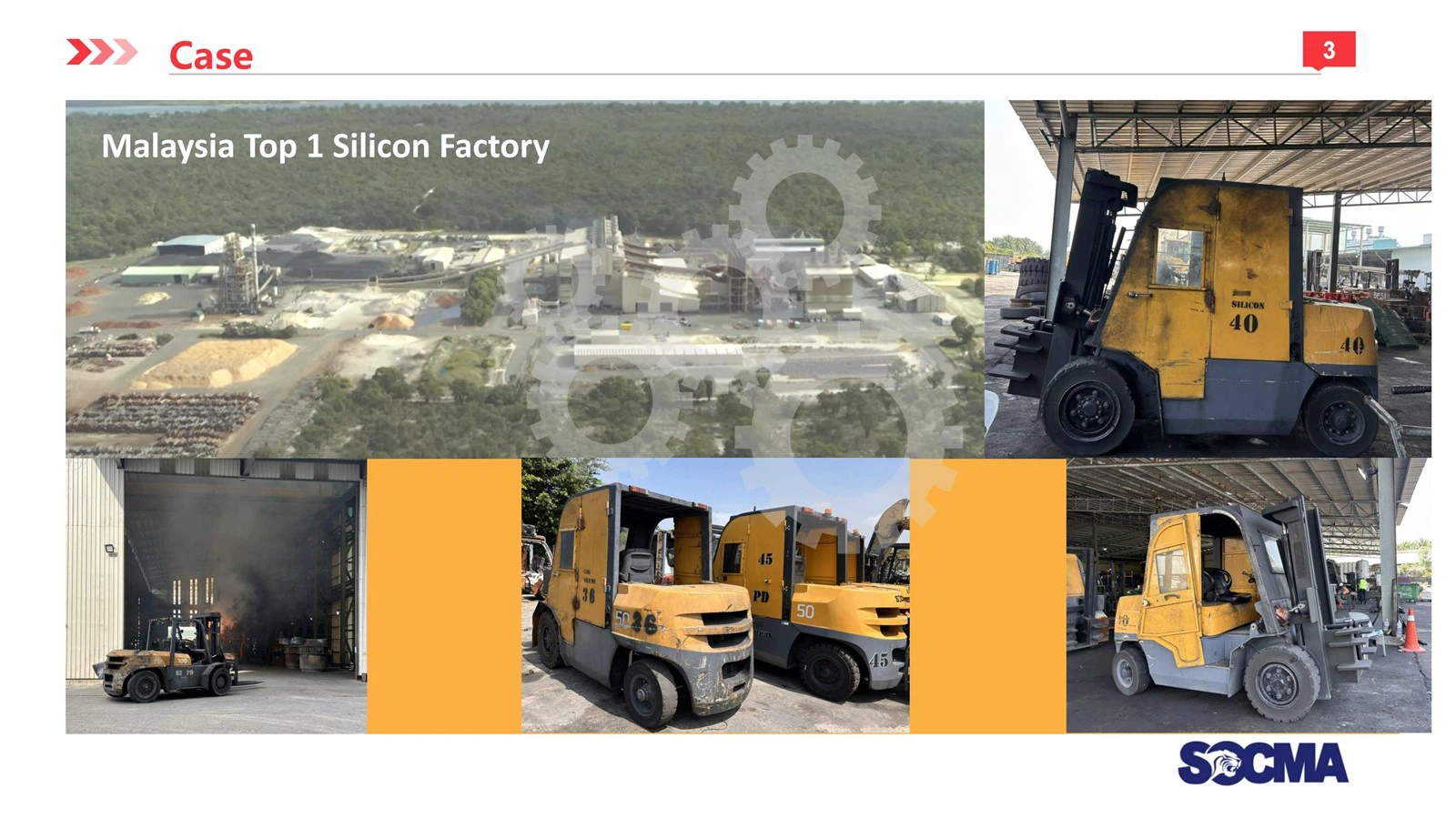
This landmark implementation at Southeast Asia's largest silicon production facility demonstrates SOCMA's capability in extreme industrial environments. The facility, producing 30,000+ tons annually, operates multiple electric arc furnaces at 2000°C. SOCMA's customized solution included a fleet of high-temperature forklifts with enhanced thermal protection systems, resulting in 40% improved operational efficiency and 60% reduced maintenance downtime compared to conventional equipment.
2. Performance Analysis Data
Comprehensive performance metrics from multiple installations show significant improvements: average equipment uptime increased to 98%, maintenance costs reduced by 35%, and operational safety incidents decreased by 70%. The specialized designs have proven particularly effective in continuous operation scenarios, with mean time between failures (MTBF) exceeding industry standards by 45%.
3. Safety Achievement Records
Safety performance data indicates zero major incidents in high-temperature operations across all installations. The integrated safety systems have prevented an estimated 150 potential incidents through automated intervention. Operator feedback indicates 90% satisfaction with safety features and operational comfort in extreme conditions.
4. Cost-Benefit Analysis
Investment analysis shows a typical ROI period of 2.3 years, with total cost of ownership reduced by 25% compared to standard equipment. The enhanced durability and reduced maintenance requirements contribute to significant long-term cost savings, while improved operational efficiency has increased production capacity by an average of 30%.
VI. Maintenance Requirements
1. Scheduled Maintenance Protocols
The maintenance program incorporates daily, weekly, and monthly inspection schedules optimized for high-temperature operations. Critical components undergo thermal stress analysis every 500 operating hours, with specialized diagnostic tools monitoring structural integrity. The program includes predictive maintenance elements using real-time sensor data to optimize service intervals.
2. Component Lifecycle Management
Key component lifecycle tracking utilizes advanced monitoring systems to predict replacement needs. High-temperature components undergo regular thermal imaging analysis, with replacement schedules optimized based on operational conditions. The system maintains detailed wear analysis data to prevent unexpected failures.
3. Emergency Maintenance Procedures
Comprehensive emergency response protocols include rapid intervention procedures for critical systems. The maintenance team maintains 24/7 readiness with specialized high-temperature repair capabilities. Emergency repair kits and critical spare parts are strategically positioned to minimize downtime during unexpected issues.
4. Preventive Maintenance Strategy
The preventive maintenance strategy incorporates advanced diagnostic tools and predictive analytics to optimize equipment performance. Regular thermal stress analysis and structural integrity checks prevent potential failures. The system includes automated maintenance alerts based on real-time performance data.
VII. Economic Benefits Analysis
1. Long-term Cost Effectiveness
Analysis of operational data demonstrates significant cost advantages over standard equipment. The specialized design results in 40% longer equipment lifespan, with maintenance costs reduced by 35%. Energy efficiency improvements contribute to 25% lower operational costs, while improved durability reduces replacement part expenses by 50%.
2. Productivity Improvements
Operational efficiency metrics show 30% faster material handling speeds, 45% reduced loading/unloading times, and 25% increased throughput capacity. The enhanced reliability and reduced maintenance requirements contribute to significantly higher production capacity, with measurable improvements in overall plant efficiency.
3. Return on Investment Calculation
Detailed ROI analysis indicates initial investment recovery within 2.3 years through reduced operational costs and improved efficiency. The enhanced durability and reduced maintenance requirements contribute to significant long-term cost savings, while improved operational capabilities increase production value by an average of 35%.
4. Operational Cost Reduction
Cost reduction achievements include 40% lower maintenance expenses, 30% reduced spare parts consumption, and 25% improved fuel efficiency. The specialized design results in fewer component failures and extended service intervals, contributing to significant reductions in total operational costs.
VIII. Industry Development Trends
1. Technological Evolution
Current industry trends indicate increasing automation integration, with SOCMA leading in smart system development. Advanced features include AI-powered operation optimization, IoT connectivity for real-time monitoring, and predictive maintenance capabilities utilizing big data analytics. Future developments focus on autonomous operation capabilities in high-temperature environments.
2. Safety Enhancement Developments
Emerging safety technologies include advanced thermal protection systems, enhanced operator assistance features, and improved emergency response capabilities. Development focuses on reducing operator exposure to extreme conditions while maintaining operational efficiency. New safety systems incorporate AI-based risk assessment and automated intervention capabilities.
3. Environmental Compliance Innovations
Environmental protection developments include improved energy efficiency systems, reduced emissions technologies, and sustainable operation features. New designs focus on minimizing environmental impact while maintaining performance capabilities. Advanced filtration and protection systems reduce environmental contamination risks.
4. Future Market Directions
Market analysis indicates growing demand for specialized high-temperature handling equipment, with increasing focus on automation and safety features. Industry trends suggest continued development of smart systems and improved efficiency capabilities. Future developments will emphasize integrated automation and enhanced safety features while maintaining robust performance in extreme conditions.
In the rapidly evolving silicon production industry, SOCMA's specialized forklift solutions represent the pinnacle of engineering achievement in extreme environment material handling. Our comprehensive approach combines advanced thermal protection technology, intelligent safety systems, and optimized operational capabilities, setting new standards for performance and reliability in high-temperature industrial applications. The integration of Industry 4.0 technologies with robust physical engineering demonstrates our commitment to driving innovation while ensuring practical, reliable solutions for the most demanding industrial environments.
Experience the SOCMA advantage in your silicon production facility today. Our team of specialized engineers is ready to analyze your specific operational requirements and develop customized solutions that maximize efficiency while ensuring safety and reliability. Contact SOCMA now to schedule a consultation and site assessment - let us show you how our advanced forklift solutions can transform your high-temperature material handling operations.


