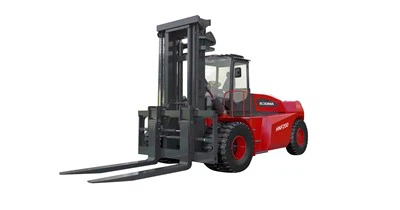
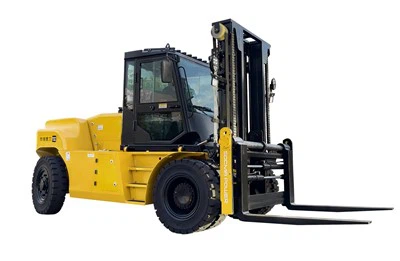
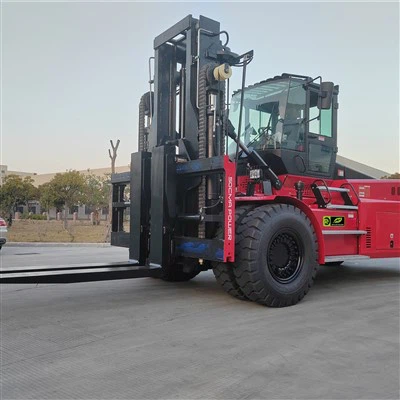
Hey there! As a supplier of 36-ton forklifts, I often get asked about the fuel efficiency of these heavy-duty machines. It's a crucial factor, especially when you're looking at long-term operational costs and environmental impact. So, let's dive right into what affects the fuel efficiency of a 36-ton forklift and how you can make the most out of it.
What Determines the Fuel Efficiency of a 36-Ton Forklift?
Engine Technology
The heart of any forklift is its engine, and in the case of a 36-ton behemoth, it needs to be powerful enough to handle the load. Modern engines are designed with advanced fuel injection systems and combustion technologies that can significantly improve fuel efficiency. For instance, some engines use direct injection, which precisely delivers fuel into the combustion chamber, ensuring better combustion and less wasted fuel.
Load Management
How you use the forklift plays a huge role in its fuel consumption. If you're constantly overloading the forklift, it has to work harder, burning more fuel in the process. On the flip side, if you're using the forklift for lighter loads than it's designed for, it might still be consuming more fuel than necessary because the engine isn't operating at an optimal load. So, proper load management is key.
Operator Skills
A skilled operator can make a big difference in fuel efficiency. Smooth acceleration, deceleration, and turning can reduce the strain on the engine and save fuel. Aggressive driving, on the other hand, can lead to unnecessary fuel consumption. Training your operators to drive the forklift efficiently can have a significant impact on your overall fuel costs.
Maintenance
Regular maintenance is essential for keeping the forklift running at peak efficiency. A well-maintained engine, with clean filters, proper lubrication, and timely tune-ups, will consume less fuel. Ignoring maintenance can lead to engine problems, such as poor combustion or increased friction, which can drive up fuel consumption.
Measuring Fuel Efficiency
Fuel efficiency is typically measured in terms of gallons per hour (GPH) or liters per hour (LPH). However, it's important to note that the actual fuel consumption can vary depending on the factors mentioned above. For a 36-ton forklift, you can expect the fuel consumption to be in the range of 5 - 10 GPH (or 19 - 38 LPH), depending on the operating conditions.


To get a more accurate measure of fuel efficiency, you can track the fuel consumption over a period of time and compare it to the amount of work done. This will give you a better understanding of how efficiently the forklift is operating.
Improving Fuel Efficiency
Optimize Routes
If your forklift is used in a large warehouse or outdoor yard, planning the most efficient routes can save a lot of fuel. Minimizing unnecessary travel and ensuring that the forklift moves in a straight line as much as possible can reduce fuel consumption.
Use Technology
Some modern forklifts come equipped with telematics systems that can monitor fuel consumption, engine performance, and operator behavior. These systems can provide valuable insights that can help you identify areas for improvement and make adjustments to increase fuel efficiency.
Consider Alternative Fuels
In addition to diesel, there are other alternative fuels available for forklifts, such as natural gas and electricity. Natural gas forklifts can offer lower fuel costs and reduced emissions, while electric forklifts are even more environmentally friendly and can be more cost-effective in the long run, especially if you have access to low-cost electricity.
Comparing with Other Forklifts
If you're considering a 36-ton forklift, you might also be interested in other heavy-duty forklifts. For example, the SOCMA 18 Ton Forklift HNF180-900-B/C, the SOCMA 16 Ton Forklift HNF160-900-C, and the SOCMA 20 Ton Forklift HNF200-1250-A. These forklifts are smaller in size and typically have lower fuel consumption. However, the 36-ton forklift offers greater lifting capacity, which might be necessary for your specific application.
If you're in the UAE and looking for a 10-ton forklift, check out the 10 Ton Forklift Uae. And for those interested in electric forklifts, the SOCMA 25 Ton Electric Forklift is a great option.
Conclusion
The fuel efficiency of a 36-ton forklift is influenced by several factors, including engine technology, load management, operator skills, and maintenance. By understanding these factors and taking steps to optimize them, you can improve the fuel efficiency of your forklift and reduce your operating costs.
If you're in the market for a 36-ton forklift or any other heavy-duty forklift, I'm here to help. Whether you have questions about fuel efficiency, performance, or pricing, feel free to reach out for a detailed discussion. Let's work together to find the best forklift solution for your business.
References
- Forklift Operation Manuals
- Industry Reports on Forklift Performance and Fuel Efficiency