

What are the process principles behind lithium-ion battery slurry mixing?
The electrochemical reactions in lithium-ion batteries rely on the active materials of the cathode and anode. In the industry, these active materials are typically combined with various functional additives and applied as a thin layer onto metal current collectors to form the fundamental electrode structure-the core unit for energy storage and release. Electrode fabrication involves numerous steps requiring extremely high precision; slurry mixing, as the initial core step, directly determines slurry quality. This, in turn, affects subsequent processes such as coating, calendering, and slitting, ultimately influencing the battery's capacity, cycle life, rate performance, and safety stability.
In lithium-ion battery manufacturing, slurry mixing is a precise material compounding process. Following established formulation ratios and feeding sequences, solid components-such as cathode and anode active materials, conductive agents, dispersants, binders, and functional additives-are precisely introduced into mixing equipment along with specialized solvents. Through mechanical actions generated by the equipment-including tumbling, kneading, high-speed shearing, and turbulent mixing-the materials' initial agglomerated states are broken down, and the solid and liquid phases are thoroughly integrated. The result is a uniform, stable solid-liquid suspension system with flow characteristics optimized for the coating process.
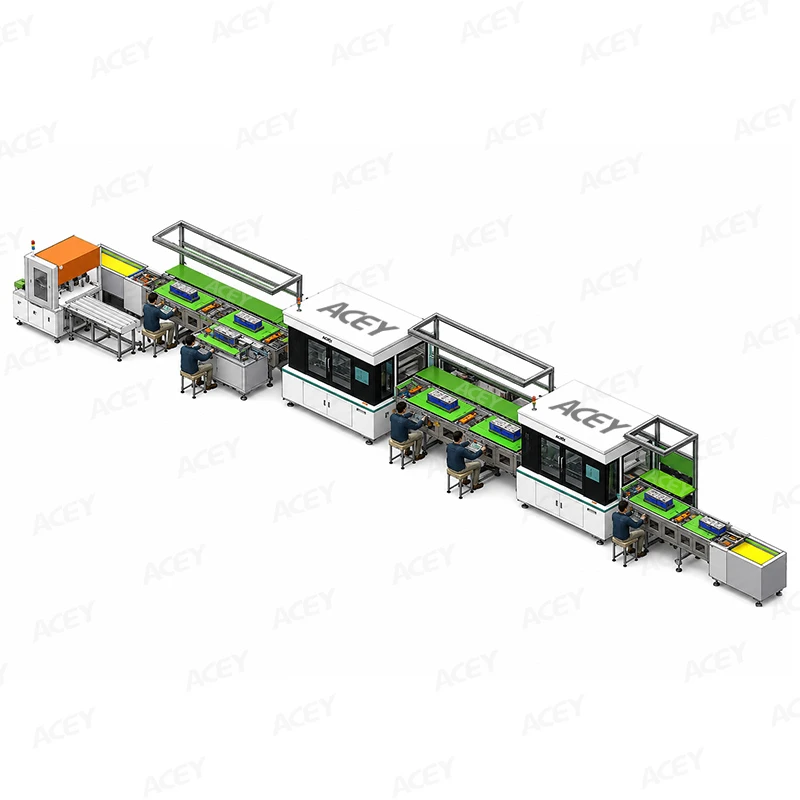
Acey Mixer
At its core, slurry mixing relies on two physical processes-mass transfer and heat transfer-to achieve the uniform dispersion of solid particles, the thorough wetting of powders by solvents, and the homogeneous mixing of all components. However, the mixing process is not merely a physical change; anomalies in operating parameters can trigger various side reactions-such as slurry gelation, powder oxidation, binder degradation, or secondary particle agglomeration-directly leading to slurry waste and coating defects. Consequently, key process parameters-including mixing temperature, rotational speed, duration, vacuum level, and feeding sequence-serve as critical control points in the design and production management of the slurry mixing process.
Three Core Elements of the Mixing Process
The preparation of high-quality battery slurry is not constrained by specific mixing equipment or process methods; rather, the design of any mixing scheme centers on the fundamental principles of material interaction. These principles can be summarized into three core elements: wetting, dispersion, and stabilization. These elements progress sequentially and complement one another, collectively determining the final quality of the slurry and serving as the essential foundation for achieving slurry uniformity and stability.
(1) Wetting
Wetting is the fundamental physical phenomenon involving the contact and integration of solid and liquid phases. Specifically, it refers to the process wherein a liquid solvent comes into contact with solid powder particles, spreads and permeates along their surfaces, gradually displaces adsorbed air and moisture, and ultimately completely covers the solid surface to form a solid-liquid interface. It is also the prerequisite for the powder to break free from gas-solid agglomeration.
In the industry, the contact angle (θ) is commonly used as the key metric for quantitatively evaluating wetting performance. The contact angle is defined as the angle formed-within the liquid phase-between the tangent to the liquid surface and the tangent to the solid surface at the point where the liquid, solid, and gas phases meet. Its magnitude directly reflects the solvent's ability to wet the powder. The specific criteria are as follows:
When θ is an acute angle, the solvent spreads smoothly across the solid particle surface, achieving effective wetting; when θ = 0°, the solvent completely covers the solid surface, achieving a state of complete wetting; when θ is an obtuse angle, the solvent struggles to spread across the solid surface, causing the liquid to contract and bead up rather than penetrate the powder, indicating non-wetting; when θ = π, the solvent and solid powder are completely mutually repellent, representing a state of complete non-wetting.
The solvents commonly used in lithium-ion battery slurry production fall into two categories: NMP (N-Methyl-2-pyrrolidone) for solvent-based (oily) systems and deionized water for water-based systems. The solid materials requiring wetting primarily consist of powder particles such as cathode and anode active materials, conductive carbon black, carbon nanotubes, and graphite. The compatibility between the solvent and the powder directly determines the spontaneous wetting effect and serves as a crucial basis for setting mixing process parameters.
(2) Dispersion
Dispersion is the process-building upon the wetting stage-of using mechanical force to break down primary powder agglomerates and refine particle aggregate structures, thereby ensuring the uniform distribution of various powder particles (such as active materials and conductive agents) within the solvent system. Due to their ultrafine particle size, large specific surface area, and high surface energy, raw powder materials for lithium-ion batteries are highly prone to forming micron-scale agglomerates during manufacturing and storage. Direct mixing without proper dispersion would lead to localized material accumulation-such as clustering of conductive agents or uneven distribution of active materials-ultimately resulting in excessive local internal resistance in the electrode sheet and poor battery performance consistency. Therefore, the core objective of the shear and turbulent forces generated during mixing is to break down powder agglomerates and achieve both macroscopic and microscopic uniformity among the multi-component materials.
(3) Stabilization
Stabilization is crucial for maintaining slurry quality. It refers to the ability of the solid-liquid suspension system-following wetting and dispersion-to maintain a uniform state over an extended period throughout the stages of resting, transport, and coating. This ensures the absence of anomalies such as particle sedimentation, phase separation, re-agglomeration, gelation, or sudden viscosity changes. Good stability relies on effective wetting and uniform dispersion, as well as the interfacial protective effects of binders and dispersants. This effectively guarantees consistent slurry quality from the completion of mixing through to the end of the coating process, preventing manufacturing issues-such as uneven coating thickness or electrode sheet defects-that could arise from fluctuations in the slurry's state.
Technical Requirements and Core Functions of Mixing
The core function of slurry mixing is to produce high-quality slurry suitable for the coating process of lithium-ion battery electrodes; the overall quality of the slurry directly determines the quality of the formed electrode sheet and the electrochemical performance of the battery. Based on mixing process principles, coating production needs, and battery performance requirements, qualified lithium-ion battery slurry must meet standards across three dimensions: basic performance, coating process performance, and specific microstructural performance. The specific standards are as follows:

(1) Core Basic Requirements for Slurry
Good uniformit
At the macroscopic level, there must be no dry powder, lumps, or localized material accumulation; at the microscopic level, active materials, conductive agents, and binders must be uniformly distributed with no deviation in component ratios, ensuring performance consistency across the entire batch of slurry.
Excellent dispersibility
Ultrafine powders are fully de-agglomerated with no large agglomerates; the conductive network formed is continuous and uniform, effectively reducing electrode internal resistance and enhancing charge-discharge stability.
High stability
The slurry exhibits no sedimentation, phase separation, flocculation, or gelation during prolonged static storage; key parameters such as viscosity and solid content remain stable, making it suitable for continuous mass production.
(2) Specific requirements for coating process compatibility
From the perspective of industrial-scale coating and calendering, a qualified slurry must meet process compatibility requirements to ensure high production efficiency and high product yield:
High solid content: Maximizing solid content while maintaining slurry fluidity effectively reduces solvent usage and drying energy consumption, while improving coating thickness precision and production efficiency-a key metric for industrial cost reduction and efficiency enhancement.
Appropriate viscosity: Slurry viscosity must match the operating parameters of the coating equipment. Excessive viscosity can lead to coating interruptions, uneven thickness, and surface scratches; conversely, excessively low viscosity causes issues such as sagging, insufficient coating thickness, and particle sedimentation, failing to meet electrode formation standards.
Smooth filtration: The slurry must be free of large particles, gel impurities, and agglomerates, allowing it to pass smoothly through production filters. This prevents filter clogging and coating die issues, ensures continuous and stable production line operation, and eliminates defects such as pinholes and blisters caused by large particles.
(3) Micro-structural functional requirements for specialized applications
For high-end lithium battery products-such as those designed for high-rate discharge, high energy density, or long cycle life-the slurry must meet specific micro-structural design requirements:
Formation of a specific micro-encapsulation structure: Precise control of the mixing process ensures that binders and conductive agents uniformly coat the surfaces of the active material particles. A continuous, highly efficient electron transport network formed by a complete conductive coating reduces the battery's internal resistance; meanwhile, a uniform binder coating enhances the adhesion between the powder and the current collector, mitigating the expansion and detachment of active materials during charge-discharge cycles, thereby significantly improving the battery's cycle life and structural stability.